Love this? Save it for later!
Share the inspiration with your friends
My brother-in-law, Dave, stood over the counter with a measuring cup of chicken broth and asked why I couldn’t just bake the stuffing in a casserole dish instead of the traditional roasting pan. I started to explain why that wouldn’t work — then stopped. I had spent the last three hours sweating over a turkey, and the last two kneading bread cubes into submission. The idea of a loose, unbaked casserole sounded like a recipe for soggy disappointment. But he was already pouring the broth. I was too tired to fight it. So I watched, arms crossed, waiting for the inevitable collapse.
I’m not supposed to play favorites with recipes, but this one has permanently stolen the show. The smell of sage and browned sausage hit the air before the dish even left the oven. It was aromatic, rich, and completely different from the dry, crouton-like stuffing we usually endure. Dave didn’t apologize. He just took a bite and grinned, knowing he had accidentally invented something better.
You know that feeling when you’re so focused on doing something the “right” way that you miss a simpler, better path? That was me. I had been making stuffing the hard way for years, worrying about moisture levels and bread types. Dave, who considers himself a culinary disaster, just wanted to make a dish that could sit in the fridge overnight and go into the oven while we drank wine. It was pragmatic. It was lazy. It was perfect.
The texture was surprisingly cohesive, with the bread holding onto the savory juices without turning into mush. The herbs, which usually get lost in a crowded roasting pan, had room to breathe and bloom in the wide, shallow casserole. We ended up scraping the bottom of the dish clean. Now, every time I make my best make-ahead sausage and herb stuffing casserole, I think about Dave’s stubbornness. It taught me that sometimes the best cooking happens when you let go of tradition and trust the process.
This recipe stayed with me because it solved a real problem: stress. I keep making it because it allows me to be present with my guests instead of chained to the stove. It’s comforting, reliable, and honestly, it just tastes better because it has time to settle.
Why You’ll Love This Recipe
There are a thousand stuffing recipes out there, but this best make-ahead sausage and herb stuffing casserole stands out because it actually works when life gets chaotic. I’ve tested versions that turned out dry as cardboard and others that were more soup than side dish. This one hits that sweet spot of moist, savory, and structurally sound. It’s not just about convenience; it’s about flavor depth that comes from patience.
Here is why this recipe has earned a permanent spot in my weekly rotation:
* **Quick & Easy Prep:** While the baking takes time, the actual prep is straightforward. You can chop, mix, and assemble this in under 30 minutes, which is perfect for busy weeknights or stressful holiday mornings.
* **Simple Ingredients:** You likely have most of this in your kitchen already. No exotic spices or hard-to-find herbs are required. Just good bread, quality sausage, and fresh herbs.
* **Perfect for Meal Prep:** This is the ultimate make-ahead dish. You can assemble it the night before, refrigerate it, and bake it fresh. It saves you precious oven space and mental energy on the big day.
* **Crowd-Pleaser:** It has a broad appeal. The savory sausage balances the earthy herbs, and the soft texture is comforting for kids and adults alike. It’s rarely left uneaten.
* **Unbelievably Delicious:** The combination of buttery bread and rich sausage creates a next-level comfort food experience. It’s the kind of dish that makes you close your eyes after the first bite.
What makes this recipe different from the rest is the technique of letting it rest before baking. Most people rush this step, but letting the bread absorb the liquid overnight ensures every bite is flavorful. It’s not just another stuffing recipe; it’s your best version. Whether you are hosting a formal dinner or just feeding your family, this casserole turns a simple meal into something memorable without the stress.
What Ingredients You Will Need
This recipe uses simple, wholesome ingredients to deliver bold flavor and satisfying texture without the fuss. The key is quality over quantity. Since there are fewer components, each one needs to shine. I prefer using artisanal breads that can hold up to the moisture without disintegrating immediately.
Here is what you will need to get started:
* **Stale Bread:** About 10 cups of cubed bread. French baguette or sourdough works best because of their sturdy crumb structure. Avoid soft sandwich bread unless you reduce the liquid slightly.
* **Breakfast Sausage:** 1 pound of pork breakfast sausage. I recommend Johnsonville or a local butcher’s blend. Look for sausage with a good amount of fat content for flavor. If you prefer turkey sausage, just add a tablespoon of olive oil.
* **Fresh Herbs:** 1/2 cup of fresh sage leaves, chopped. Sage is non-negotiable for that classic holiday taste. You can also add 2 tablespoons of fresh thyme leaves for an earthy undertone.
* **Aromatics:** 1 large yellow onion, finely diced, and 3 cloves of garlic, minced. These form the flavor base. Don’t skip the garlic; it adds necessary depth.
* **Eggs:** 3 large eggs, beaten. These act as the binder to hold the casserole together. Room temperature eggs mix more evenly.
* **Broth:** 2 cups of low-sodium chicken broth. Use a good quality broth, like Swanson or a homemade stock. Low sodium is important so you can control the salt level yourself.
* **Heavy Cream:** 1/2 cup of heavy cream. This adds richness and ensures the texture is luxurious rather than dry.
* **Butter:** 2 tablespoons of unsalted butter for sautéing the onions and sausage.
* **Seasoning:** 1 teaspoon of black pepper and 1/2 teaspoon of salt (adjust to taste).
For the best texture, I personally prefer using a mix of white and dark meat sausage. It adds complexity. If you are watching your sodium intake, look for reduced-sodium sausage options, but you may need to add a pinch more salt to the broth. In the summer, you can swap the fresh sage for dried, but use half the amount since dried herbs are more potent.
Equipment Needed
You don’t need fancy gadgets to make this best make-ahead sausage and herb stuffing casserole. A few standard tools will get the job done efficiently.
* **9×13 Inch Casserole Dish:** This is the standard size for this recipe. Glass or ceramic dishes work well because they distribute heat evenly. Avoid metal pans if you want a softer texture, as they can cook the edges too quickly.
* **Large Skillet:** A cast-iron skillet or a large non-stick pan is ideal for browning the sausage and sautéing the onions. Cast iron retains heat better, which helps get a good sear on the meat.
* **Mixing Bowl:** A large bowl for combining the bread, herbs, and wet ingredients.
* **Measuring Cups and Spoons:** Essential for getting the ratio of liquid to bread correct.
* **Sharp Knife and Cutting Board:** For chopping the bread, onions, and herbs.
If you don’t have a 9×13 dish, you can use two smaller 8×8 dishes, but you will need to adjust the baking time slightly. I’ve also used disposable aluminum pans for easy cleanup after parties. Just make sure to place them on a baking sheet for stability.
Preparation Method
Follow these steps to create a perfectly balanced casserole. The process is simple, but attention to detail matters.
1. **Prepare the Bread (10 minutes):** Cut your stale bread into 1-inch cubes. Spread them out on a baking sheet and let them dry out in a low oven (200°F) for 10 minutes, or leave them out overnight. This step is crucial for absorbing liquid without getting soggy.
2. **Brown the Sausage (5 minutes):** Heat your skillet over medium heat. Add the sausage, breaking it up with a spoon. Cook until browned and cooked through. Drain excess grease if there is too much, but leave a little for flavor.
3. **Sauté Aromatics (5 minutes):** In the same skillet, add the butter. Once melted, add the onions and cook until translucent. Add the garlic and fresh herbs in the last minute. This releases the essential oils in the sage and thyme.
4. **Combine Wet Ingredients (2 minutes):** In your large mixing bowl, whisk together the beaten eggs, chicken broth, and heavy cream. Add a pinch of black pepper.
5. **Mix It All Together (3 minutes):** Add the dried bread cubes to the bowl. Pour the egg mixture over the bread. Add the sausage and onion mixture. Gently toss everything together. You want the bread to soak up the liquid. Let it sit for 5 minutes to absorb.
6. **Transfer to Dish (1 minute):** Grease your 9×13 casserole dish. Pour the mixture into the dish and spread it evenly. Press down gently with the back of a spoon to remove air pockets.
7. **Chill (Optional but Recommended):** Cover tightly with plastic wrap and refrigerate for up to 24 hours. This is the “make-ahead” magic. If baking immediately, skip this step but let it rest for 15 minutes at room temperature.
8. **Bake (45-50 minutes):** Preheat your oven to 350°F. If the dish was chilled, let it sit out for 30 minutes before baking. Bake until the top is golden brown and the center is hot (165°F internal temperature).
9. **Rest (10 minutes):** Let the casserole rest before serving. This allows the structure to set, making it easier to slice.
Cooking Tips & Techniques
I’ve made enough stuffing to know where things can go wrong. Here are some professional techniques to ensure success.
* **Don’t Skip the Drying Step:** Fresh bread will turn your casserole into a pudding. Drying the cubes ensures they act like sponges rather than mush.
* **Watch the Liquid:** Every bread absorbs liquid differently. If your bread is very dry, you might need an extra 1/4 cup of broth. If it’s dense, you might need less.
* **Brown the Sausage Well:** Don’t just cook it until it’s no longer pink. Get a good crust on the sausage. This adds a nutty, roasted flavor that enhances the overall dish.
* **Room Temperature Ingredients:** If you’re baking immediately, let the eggs and broth come to room temperature. This helps the mixture heat evenly.
* **The Cover Trick:** If the top is browning too fast, cover it loosely with foil for the first 30 minutes, then remove it to crisp up.
I once forgot to drain the sausage grease, and the result was oily and heavy. Lesson learned. Always taste your mixture before baking if you can (just a tiny bit of the raw egg mixture is fine if cooked properly, but better to taste the sautéed veggies). Adjust salt and pepper at this stage.
Variations & Adaptations
This recipe is flexible. You can adapt it to suit different dietary needs or flavor preferences.
* **Turkey Sausage:** Swap pork sausage for turkey sausage. Add a tablespoon of olive oil to the pan since turkey sausage is leaner. The flavor will be lighter but still delicious.
* **Vegetarian Version:** Omit the sausage and add 1 cup of chopped mushrooms. Sauté the mushrooms with the onions until they release their moisture and brown. This adds a meaty texture without the meat.
* **Gluten-Free:** Use gluten-free bread cubes. Make sure to check that your broth and sausage are also gluten-free. You may need slightly more liquid as GF bread can be thirstier.
* **Spicy Kick:** Add 1/2 teaspoon of red pepper flakes or use a spicy Italian sausage. This cuts through the richness and adds a nice heat.
* **Cheese Twist:** Stir in 1/2 cup of shredded sharp cheddar or gruyere cheese before baking. This creates a cheesy, savory crust that pairs well with the herbs.
I tried adding cranberry sauce to the mix once, and it was surprisingly good. The sweetness balanced the savory sausage. It’s worth experimenting with.
Serving & Storage Suggestions
This best make-ahead sausage and herb stuffing casserole is best served warm. It pairs beautifully with roasted turkey, ham, or even just a simple green salad.
* **Presentation:** Garnish with fresh parsley or thyme sprigs before serving. It adds a pop of color and freshness.
* **Beverage Pairing:** Serve with a crisp white wine or a light lager. The acidity cuts through the richness of the dish.
* **Storage:** Store leftovers in an airtight container in the refrigerator for up to 4 days. The flavors actually meld and improve over the first day.
* **Reheating:** Reheat individual portions in the microwave for 1-2 minutes. For the whole dish, cover with foil and bake at 350°F for 20 minutes.
* **Freezing:** You can freeze the unbaked casserole. Wrap it tightly in plastic and foil. Thaw in the fridge overnight before baking. Add 10-15 minutes to the baking time if baking from frozen.
The texture remains soft and moist even after reheating, which is rare for stuffing dishes.
Nutritional Information & Benefits
This recipe is hearty and satisfying. Here is an estimated nutritional breakdown per serving (assuming 8 servings):
* **Calories:** ~350 kcal
* **Protein:** 12g
* **Carbohydrates:** 35g
* **Fat:** 18g
* **Fiber:** 2g
The sausage provides protein and flavor, while the bread offers energy. Using fresh herbs adds antioxidants and anti-inflammatory benefits. If you use low-sodium broth and leaner sausage, you can reduce the sodium content significantly. This dish is not typically gluten-free unless modified, so be mindful of that. It’s a comfort food that feels indulgent but is balanced with vegetables and herbs.
Conclusion
This best make-ahead sausage and herb stuffing casserole is worth trying because it simplifies holiday cooking without sacrificing flavor. It’s reliable, delicious, and forgiving. I love this recipe because it lets me enjoy my guests instead of stressing over the oven.
I encourage you to customize it with your favorite herbs or sausages. Make it your own. Try it for your next dinner party or holiday meal. Let me know how it turns out in the comments below!
Start making it tonight, and thank me later. It’s the side dish that will save your meal.
Frequently Asked Questions
Can I make this stuffing ahead of time?
Yes, this is the best part. You can assemble it the night before, cover it, and refrigerate it. Just add 10-15 minutes to the baking time if you bake it straight from the fridge.
What kind of bread is best for stuffing?
Sourdough or French baguette works best because they are sturdy and absorb liquid well without turning mushy. Avoid soft white bread unless you dry it out thoroughly.
Can I use turkey sausage instead of pork?
Absolutely. Turkey sausage is a leaner option. Just add a little olive oil to the pan to compensate for the lower fat content.
How do I prevent the stuffing from being too dry?
Make sure you use enough liquid. If the bread is very dry, you may need extra broth. Also, don’t skip the resting step before baking; it helps the bread absorb the moisture evenly.
Can I freeze this casserole?
Yes, you can freeze the unbaked casserole. Wrap it tightly and thaw in the fridge before baking. You can also freeze leftovers, though the texture may soften slightly upon reheating.
Pin This Recipe!
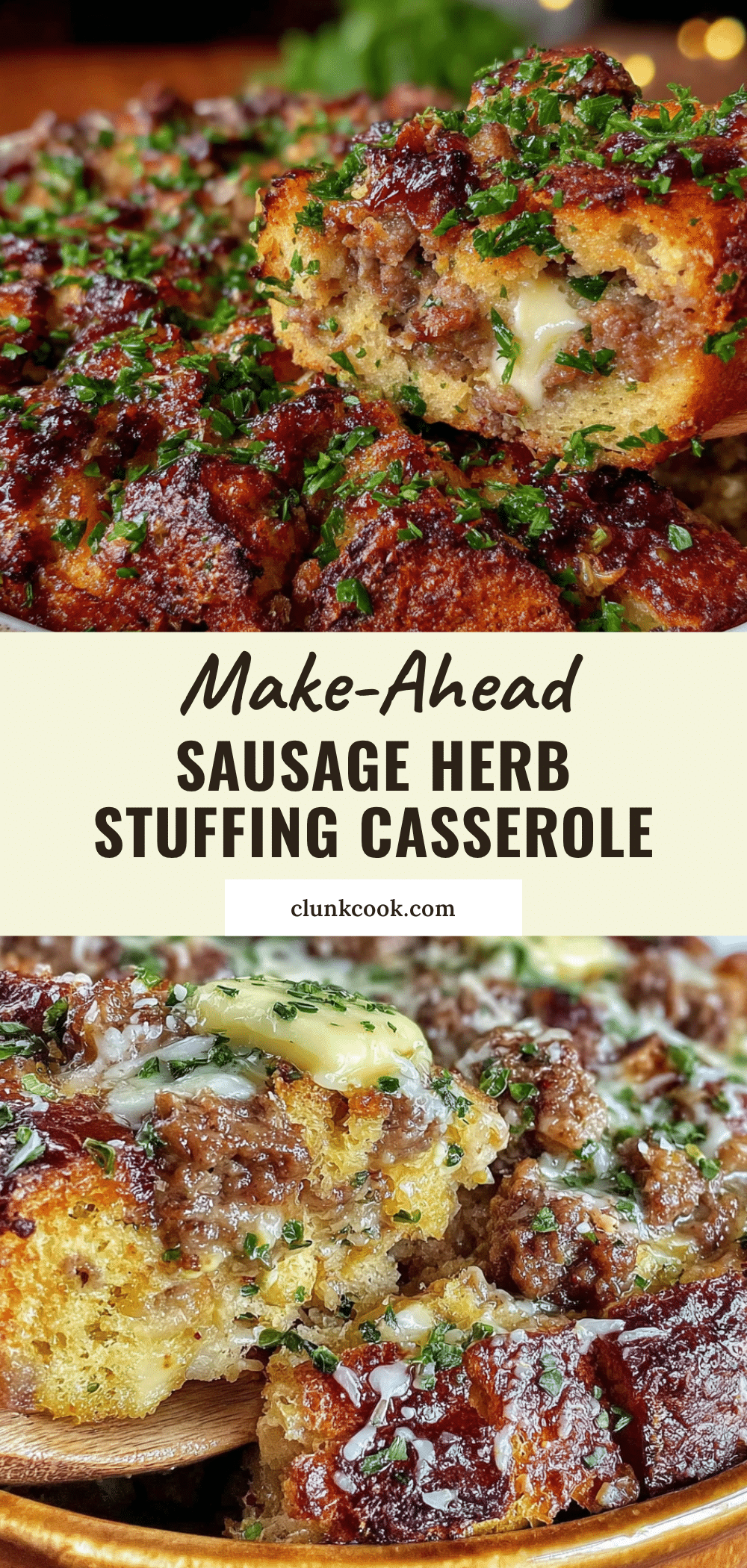
Best Sausage and Herb Stuffing Casserole: Easy Make-Ahead Recipe

A stress-free, make-ahead stuffing casserole that combines savory sausage, fresh herbs, and sturdy bread for a moist, flavorful side dish perfect for holidays or busy weeknights.
- Prep Time: 30 minutes
- Cook Time: 45-50 minutes
- Total Time: 75-80 minutes
- Yield: 8 servings 1x
- Category: Side Dish
- Cuisine: American
Ingredients
- 10 cups stale bread, cut into 1-inch cubes (French baguette or sourdough recommended)
- 1 pound pork breakfast sausage
- 1/2 cup fresh sage leaves, chopped
- 2 tablespoons fresh thyme leaves (optional)
- 1 large yellow onion, finely diced
- 3 cloves garlic, minced
- 3 large eggs, beaten
- 2 cups low-sodium chicken broth
- 1/2 cup heavy cream
- 2 tablespoons unsalted butter
- 1 teaspoon black pepper
- 1/2 teaspoon salt (adjust to taste)
Instructions
- Preheat oven to 200°F. Spread bread cubes on a baking sheet and dry for 10 minutes, or leave out overnight.
- Heat a large skillet over medium heat. Add sausage and cook until browned and cooked through, breaking it up with a spoon. Drain excess grease if necessary, leaving some for flavor.
- In the same skillet, melt butter. Add onions and cook until translucent. Add garlic and fresh herbs in the last minute to release oils.
- In a large mixing bowl, whisk together beaten eggs, chicken broth, heavy cream, and black pepper.
- Add dried bread cubes to the bowl. Pour the egg mixture over the bread. Add the sausage and onion mixture. Gently toss to combine.
- Let the mixture sit for 5 minutes to allow the bread to absorb the liquid.
- Grease a 9×13 inch casserole dish. Pour the mixture into the dish and spread evenly, pressing down gently to remove air pockets.
- For make-ahead: Cover tightly with plastic wrap and refrigerate for up to 24 hours. If baking immediately, let rest at room temperature for 15 minutes.
- Preheat oven to 350°F. If chilled, let dish sit out for 30 minutes before baking.
- Bake for 45-50 minutes until the top is golden brown and the internal temperature reaches 165°F.
- Let the casserole rest for 10 minutes before serving to allow the structure to set.
Notes
Ensure bread is stale or dried out to prevent a soggy texture. If using turkey sausage, add 1 tablespoon of olive oil. For a spicy kick, add red pepper flakes or use spicy Italian sausage. The dish can be frozen unbaked; thaw in the fridge overnight before baking.
Nutrition
- Serving Size: 1 serving (approx. 1
- Calories: 350
- Sugar: 2
- Sodium: 650
- Fat: 18
- Saturated Fat: 8
- Carbohydrates: 35
- Fiber: 2
- Protein: 12
Keywords: stuffing casserole, make-ahead stuffing, sausage stuffing, holiday side dish, easy stuffing recipe, herb stuffing, comfort food