Love this? Save it for later!
Share the inspiration with your friends
Honestly, this sauce is a revelation. I mean, we have all bought those jars of mediocre tomato sauce from the store, right? The ones that taste a little too sweet or a little too metallic? This is the exact opposite of that. This is the sauce that makes you close your eyes after the first bite, the one that tastes like a slow Sunday afternoon in Italy, even if you are making it on a frantic Wednesday night.
- Deep, Concentrated Flavor: Roasting the tomatoes low and slow does something magical. It coaxes out their natural sugars and creates a jammy, savory richness that stovetop sauces just cannot achieve. You are basically turning sunshine into gold.
- Hands-Off Cooking: The oven does all the heavy lifting here. You toss everything on a sheet pan, walk away for a couple of hours, and come back to a kitchen that smells like a trattoria. No standing over a hot stove stirring for an hour.
- Perfect for Freezing: This is the ultimate “future you” gift. Make a double batch, freeze it in portions, and you have a secret weapon for pasta, pizza, or soups all winter long. It is meal prep that actually feels luxurious.
- Simple, Whole Ingredients: There is nothing weird in this sauce. Just cherry tomatoes, good olive oil, garlic, and herbs. It is clean eating that does not feel like a compromise.
- Incredibly Versatile: Use it as a pasta sauce, a base for shakshuka, a spread for bruschetta, or a topping for grilled chicken. This one recipe does the work of ten different jars.
This is not just another tomato sauce recipe. It is the one you will find yourself making every summer when cherry tomatoes are at their peak. It is the one your friends will beg you to share, the one that makes you look like a professional chef without any of the stress. Trust me on this.
What Ingredients You Will Need
This recipe uses simple, wholesome ingredients to deliver bold flavor and satisfying texture without the fuss. The magic is in the method, not a long list of exotic items.
- 3 pounds cherry or grape tomatoes: Any color works—red, yellow, orange, or a mix. Look for firm, ripe tomatoes that are heavy for their size. I often grab the bags of mixed heirlooms from the farmers market for a more complex flavor.
- 6-8 cloves garlic, smashed: Do not bother mincing them finely. Smashed cloves will soften and sweeten as they roast, and you can either leave them in the sauce or mash them in for a deeper garlicky flavor.
- 1/3 cup extra-virgin olive oil: Use a good quality one here, as the flavor really comes through. I personally love the brand California Olive Ranch for its consistent, fruity taste.
- 1 teaspoon kosher salt: Plus more to taste. Salt is crucial for drawing out the tomatoes’ moisture and concentrating their flavor.
- 1/2 teaspoon black pepper, freshly ground: Adds a subtle warmth that balances the sweetness of the roasted tomatoes.
- 2 sprigs fresh rosemary: Or 1 teaspoon dried. Rosemary and tomatoes are a classic pairing. The aroma as it roasts is just incredible.
- 6-8 fresh basil leaves: Or 1 teaspoon dried. Stirred in at the end for a burst of fresh, peppery flavor.
- 1 tablespoon balsamic vinegar (optional): A splash at the end brightens everything up and adds a touch of acidity to balance the sweetness. I use it every time.
- Pinch of red pepper flakes (optional): For a little heat. Totally optional, but I love the tiny kick it gives.
Ingredient Selection Tips: If you can, use fresh herbs. They really do make a difference in the final depth of flavor. For the olive oil, avoid anything labeled “light” or “pure”—you want the extra-virgin stuff for the best taste. If you are using dried herbs, rub them between your palms before adding them to the pan to release their oils.
Equipment Needed
You do not need a lot of fancy gear for this one, which is part of its charm. Here is what you will need:
- Large rimmed baking sheet (half-sheet pan): A 13×18-inch pan is perfect. You want a rim to catch any juices, and you want the tomatoes in a single layer so they roast, not steam. I have had great luck with the Nordic Ware brand—they do not warp in the oven.
- Parchment paper or silicone baking mat: This makes cleanup an absolute breeze. The caramelized tomato juices can stick to the pan, and parchment paper saves you from a serious scrubbing session.
- Chef’s knife and cutting board: For smashing the garlic and any optional chopping.
- Large bowl or Dutch oven: For mixing the roasted tomatoes and blending them if you want a smoother sauce.
- Immersion blender or regular blender: For achieving your desired texture. I prefer an immersion blender because it means less cleanup—you can blend right in the pot. A standard blender works just fine, but let the sauce cool slightly first and work in batches.
- Freezer-safe containers or zip-top bags: For storing your sauce. I use a mix of quart-sized bags (laid flat to freeze) and small glass jars for single servings.
Budget-Friendly Options: If you do not have a rimmed baking sheet, a 9×13-inch baking dish will work, though you may need to roast in two batches. No immersion blender? A potato masher works great for a chunkier sauce.
Preparation Method
This method is incredibly forgiving, which is why I love it. Let us walk through it step by step.
- Preheat your oven to 300°F (150°C). Yes, 300°F. This is the “slow” part of slow-roasted. A low temperature allows the tomatoes to gently caramelize without burning the sugars or the garlic. Trust the process.
- Prepare your tomatoes. Rinse the cherry tomatoes and pat them dry. No need to halve them unless they are very large (like the size of a golf ball). If they are standard cherry size, leave them whole. Spread them on your parchment-lined baking sheet in a single layer. If they are crowded, they will steam instead of roast, so use two pans if needed.
- Add the aromatics. Tuck the smashed garlic cloves and rosemary sprigs in among the tomatoes. Drizzle everything evenly with the olive oil, then sprinkle with the kosher salt and black pepper. Use your hands to gently toss everything until the tomatoes are well coated. Honestly, getting your hands in there is the best way to ensure even coverage.
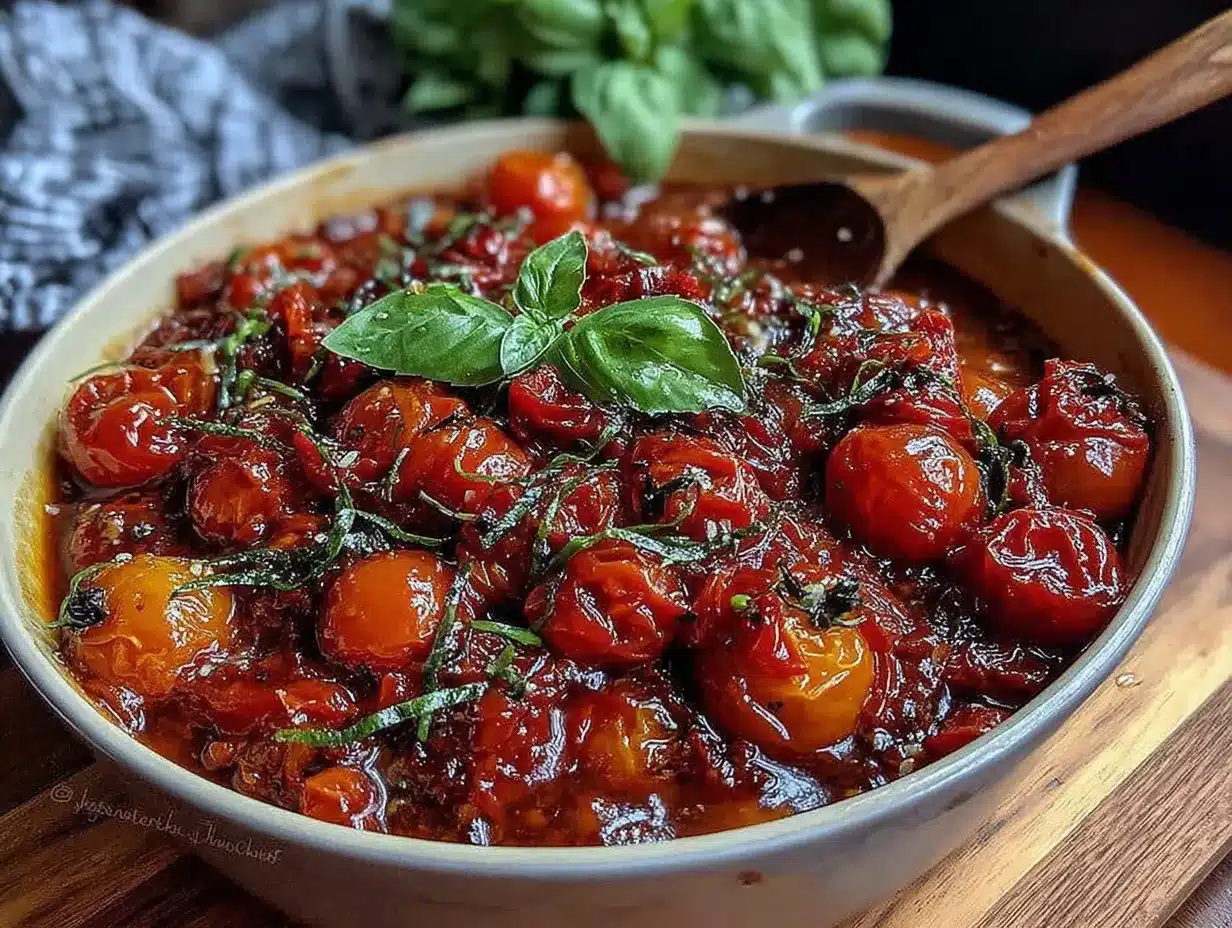
- Roast for 2 to 2.5 hours. Slide the pan into the oven and let it do its thing. You are looking for the tomatoes to be wrinkled, collapsed, and starting to caramelize. The garlic should be soft and golden. The smell at this point is absolutely intoxicating—sweet, savory, and a little bit woodsy from the rosemary.
- Remove and cool slightly. Take the pan out of the oven and let it sit for about 10 minutes. This makes handling safer and helps the flavors settle. Pick out the rosemary sprigs (the leaves will have fallen off, which is fine, but the woody stems are not pleasant to eat).
- Blend to your desired consistency. Transfer the roasted tomatoes, garlic, and all the juices from the pan to a large bowl or Dutch oven. Use your immersion blender to pulse until you reach your preferred texture. I like mine a little chunky, so I do about 10-15 quick pulses. For a silky smooth sauce, blend continuously for 30 seconds. Troubleshooting tip: If the sauce seems too thick, stir in a tablespoon of water or pasta cooking water at a time until it loosens up.
- Finish with fresh basil and vinegar. Tear the fresh basil leaves into the sauce and stir in the balsamic vinegar (if using). Taste and adjust the salt and pepper. This is your moment to perfect the seasoning. A little extra salt can really wake up the flavors.
- Cool completely before storing. This is a critical step for food safety. Spread the sauce out in a shallow dish to speed up cooling, or place the pot in an ice bath. Do not put hot sauce directly into the fridge or freezer, as it can raise the internal temperature and spoil other foods.
Personal Efficiency Tip: While the tomatoes are roasting, I usually prep my storage containers and wash my blender. It makes the final step feel so much faster.
Cooking Tips & Techniques
I have made this sauce more times than I can count, and I have definitely learned a few things the hard way. Here is what I wish I had known from the start.
- Don’t skip the low temperature. I know it is tempting to crank the oven to 400°F to speed things up. I did that once. The garlic burned, the tomatoes turned bitter, and the whole batch was a sad, acrid mess. The low, slow heat is non-negotiable for that deep, sweet flavor.
- Use a heavy-duty baking sheet. A thin, flimsy pan can warp under the heat and cause the tomatoes to slide to one side, leading to uneven cooking. A good, sturdy sheet pan is worth the investment.
- Blend carefully when hot. If you use a regular blender, only fill it halfway, remove the center cap from the lid, and cover it with a kitchen towel. This lets steam escape and prevents the lid from blowing off. I learned this lesson the messy way—tomato sauce on the ceiling is not a good look.
- Freeze in portions you will actually use. I freeze mine in 1-cup and 2-cup portions. A 1-cup portion is perfect for a single pasta dinner for two, while a 2-cup portion is great for a family meal or a batch of soup. Label your bags with the date and the volume!
- Resist the urge to add sugar. The slow roasting process naturally caramelizes the tomatoes, making them sweet enough. Adding sugar can make the sauce taste artificial and cloying.
Common Mistake to Avoid: Do not overcrowd the pan. If the tomatoes are piled on top of each other, they will steam and release too much water, leaving you with a watery sauce instead of a concentrated, jammy one. If you have a lot of tomatoes, use two pans.
Variations & Adaptations
This recipe is a fantastic base, and it loves to be played with. Here are some of my favorite twists.
- Herby Garden Sauce: Swap the rosemary for fresh thyme sprigs and add a handful of fresh oregano leaves along with the tomatoes. This gives the sauce a more Mediterranean, earthy profile that is amazing on grilled vegetables.
- Spicy Arrabbiata Kick: Before roasting, sprinkle 1-2 teaspoons of red pepper flakes over the tomatoes. The heat mellows and infuses the oil, creating a gentle warmth that builds with each bite. I made this version for a pasta alla vodka and it was a hit.
- Roasted Garlic & Onion Version: Add a quartered yellow onion and an extra head of garlic (cut in half crosswise) to the baking sheet. Roast everything together, then squeeze the roasted garlic cloves out of their skins before blending. The result is an incredibly sweet, mellow, and complex sauce that is almost like a caramelized onion soup in tomato form.
- Dairy-Free Creamy Sauce: After blending, stir in 1/4 cup of full-fat coconut milk or cashew cream. It adds a luscious, velvety texture without any dairy. This is my go-to for a quick weeknight pasta when I want something a little indulgent.
- Smoky Chipotle Twist: Add 1-2 chipotle peppers in adobo sauce (from a can) to the blender along with the roasted tomatoes. This gives the sauce a smoky, spicy depth that is incredible on tacos or enchiladas.
Serving & Storage Suggestions
This sauce is incredibly versatile, so do not limit yourself to just pasta!
Serving Suggestions:
- Classic Pasta: Toss with al dente spaghetti, bucatini, or pappardelle. Finish with a generous grating of Parmesan cheese and a drizzle of good olive oil.
- Shakshuka: Simmer the sauce in a skillet, crack a few eggs into it, and bake until the whites are set. Serve with crusty bread for dipping.
- Pizza Base: Spread a thin layer on pizza dough before adding your toppings. The concentrated flavor stands up beautifully to bold toppings like pepperoni or roasted vegetables.
- Bruschetta: Spoon the sauce (chunky style) onto toasted baguette slices, top with fresh mozzarella and basil, and broil until bubbly.
- Soup Base: Thin the sauce with vegetable or chicken broth, add cooked white beans or lentils, and you have a hearty tomato soup in minutes.
Storage Instructions:
- Refrigerator: Store in an airtight container for up to 5 days. The flavors actually continue to meld and deepen, so it might taste even better on day two or three.
- Freezer: This sauce freezes like a dream. Portion it into freezer-safe bags or jars, leaving about an inch of headspace for expansion. Lay the bags flat on a baking sheet to freeze, then stack them upright to save space. It will keep for up to 6 months.
- Reheating: Thaw overnight in the refrigerator or reheat directly from frozen in a saucepan over low heat. Add a splash of water or pasta water if the sauce seems too thick. The texture remains perfect—no separation or graininess.
Personal Note: I have found that the sauce is at its peak flavor after about a week in the fridge. Something about the time allows all the roasted notes to fully harmonize. It is a beautiful thing.
Nutritional Information & Benefits
This sauce is not just delicious; it is genuinely good for you. Here is a rough estimate per 1-cup serving (based on the recipe with 1/3 cup olive oil and no optional additions):
- Calories: ~180
- Fat: 14g (mostly heart-healthy monounsaturated fat from olive oil)
- Carbohydrates: 14g
- Fiber: 4g
- Sugar: 9g (natural, no added sugar)
- Protein: 3g
- Vitamin C: 35% of the Daily Value
- Vitamin A: 20% of the Daily Value
- Potassium: 10% of the Daily Value
Health Benefits: Tomatoes are packed with lycopene, a powerful antioxidant that is actually more bioavailable when cooked. The olive oil helps your body absorb the lycopene more effectively. Garlic is known for its anti-inflammatory and immune-boosting properties. This sauce is naturally gluten-free, dairy-free, vegan, and low in added sugars. It fits beautifully into a Mediterranean diet or any whole-foods eating plan.
Dietary Considerations: This recipe is naturally paleo-friendly and Whole30-compliant (just skip the optional balsamic vinegar, which contains sulfites). It is also nut-free and soy-free.
Conclusion
Honestly, this slow-roasted cherry tomato sauce has become a staple in my kitchen for a reason. It is the kind of recipe that feels like a secret weapon—simple to make, but the results are so much greater than the sum of its parts. Whether you are using up a glut of summer tomatoes from the garden or just want to elevate a Tuesday night dinner, this sauce delivers every single time.
I love that it lets me capture the taste of summer and tuck it away in my freezer for a rainy day. It is a little act of self-care, a promise to my future self that a great meal is always just a thaw away. I encourage you to make a double batch, play with the herbs and spices to make it your own, and find your favorite ways to use it. Maybe you will discover a variation that I have not even thought of yet!
If you try this recipe, I would love to hear about it. Drop a comment below and let me know how you served it, what twists you added, or just share a photo of your beautiful sauce. And do not forget to pin this for later so you have it ready for your next tomato haul. Happy cooking, friend!
Frequently Asked Questions
Can I use regular Roma or beefsteak tomatoes instead of cherry tomatoes?
Absolutely! Just chop them into roughly 1-inch chunks before roasting. You may need to add 15-20 minutes to the roasting time since larger tomatoes have more moisture to release. The flavor will still be fantastic.
Do I need to peel the tomatoes before roasting?
Nope! The skins are so thin on cherry tomatoes that they break down completely during roasting and blending. You will never notice them. For larger tomatoes, the skins might be a bit tougher, but the immersion blender handles them just fine.
Can I make this sauce in a slow cooker?
Yes, you can! Toss all the ingredients into a slow cooker and cook on low for 6-8 hours or on high for 3-4 hours. The main difference is that you will not get the same caramelization as you do from the dry heat of the oven. The sauce will be delicious, just a little lighter in color and flavor.
How do I know when the sauce is done roasting?
Look for three signs: The tomatoes should be deeply wrinkled and collapsed, the garlic should be soft and golden (not brown or black), and the juices in the pan should be syrupy and slightly thickened. The whole pan will smell intensely sweet and savory.
Can I add other vegetables to the roasting pan?
Definitely! Chopped bell peppers, zucchini, or carrots work beautifully. Just cut them into uniform pieces so they cook evenly. Roasted carrots add a natural sweetness that is lovely. Just keep an eye on the total volume—do not overcrowd the pan.
Pin This Recipe!
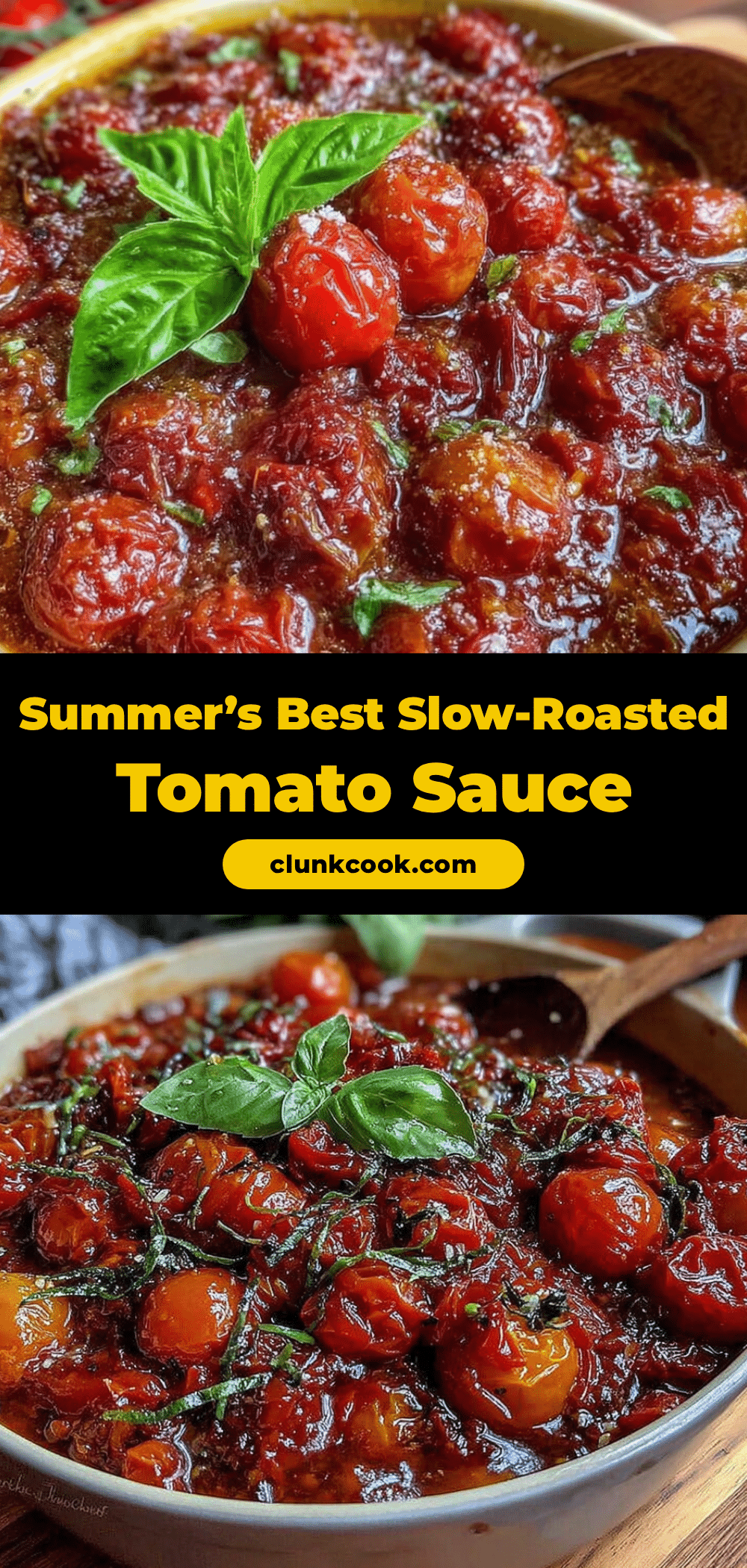
Best Slow-Roasted Cherry Tomato Sauce for Freezing
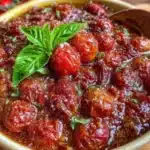
This slow-roasted cherry tomato sauce is a revelation—deep, concentrated flavor from low and slow roasting, hands-off cooking, and perfect for freezing. It’s a versatile, whole-ingredient sauce that tastes like a slow Sunday afternoon in Italy.
- Prep Time: 15 minutes
- Cook Time: 2 hours 30 minutes
- Total Time: 2 hours 45 minutes
- Yield: 4 servings 1x
- Category: Sauce
- Cuisine: Italian
Ingredients
- 3 pounds cherry or grape tomatoes
- 6–8 cloves garlic, smashed
- 1/3 cup extra-virgin olive oil
- 1 teaspoon kosher salt
- 1/2 teaspoon black pepper, freshly ground
- 2 sprigs fresh rosemary (or 1 teaspoon dried)
- 6–8 fresh basil leaves (or 1 teaspoon dried)
- 1 tablespoon balsamic vinegar (optional)
- Pinch of red pepper flakes (optional)
Instructions
- Preheat your oven to 300°F (150°C).
- Rinse the cherry tomatoes and pat them dry. No need to halve them unless they are very large. Spread them on a parchment-lined baking sheet in a single layer.
- Tuck the smashed garlic cloves and rosemary sprigs in among the tomatoes. Drizzle everything evenly with the olive oil, then sprinkle with the kosher salt and black pepper. Use your hands to gently toss everything until the tomatoes are well coated.
- Roast for 2 to 2.5 hours, until the tomatoes are wrinkled, collapsed, and starting to caramelize. The garlic should be soft and golden.
- Remove the pan from the oven and let it sit for about 10 minutes. Pick out the rosemary sprigs.
- Transfer the roasted tomatoes, garlic, and all the juices from the pan to a large bowl or Dutch oven. Use an immersion blender to pulse until you reach your preferred texture (10-15 quick pulses for chunky, 30 seconds continuous for smooth).
- Tear the fresh basil leaves into the sauce and stir in the balsamic vinegar (if using). Taste and adjust the salt and pepper.
- Cool completely before storing. Spread the sauce out in a shallow dish to speed up cooling, or place the pot in an ice bath.
Notes
Don’t skip the low temperature—it’s non-negotiable for deep, sweet flavor. Use a heavy-duty baking sheet to prevent warping. Blend carefully when hot if using a regular blender. Freeze in portions you will actually use (1-cup and 2-cup portions work well). Resist the urge to add sugar; the slow roasting naturally caramelizes the tomatoes.
Nutrition
- Serving Size: 1 cup
- Calories: 180
- Sugar: 9
- Sodium: 600
- Fat: 14
- Saturated Fat: 2
- Carbohydrates: 14
- Fiber: 4
- Protein: 3
Keywords: slow-roasted cherry tomato sauce, freezer-friendly tomato sauce, homemade tomato sauce, roasted tomato sauce, cherry tomato recipe