Love this? Save it for later!
Share the inspiration with your friends
My daughter’s third-grade teacher watched me fumbling with a ziplock bag of pre-cut melon cubes at the classroom door. She didn’t say anything at first, just smiled and held the door open with her elbow. Then she whispered, “You know, last year a mom brought fruit on sticks and the kids went absolutely bananas for them. No plates, no mess, just grab and go.” That was it. A single sentence that changed my entire approach to school party food forever.
I had been overthinking it, honestly. I’d spent the previous evening scrolling through Pinterest looking for something cute but not complicated, healthy but still fun. I ended up buying those pre-cut fruit trays from the grocery store because I ran out of time. And let me tell you, watching a dozen eight-year-olds try to eat slippery melon cubes with plastic forks while standing up was not my finest parenting moment. I mean, there was juice everywhere. On the table, on the floor, on someone’s brand new unicorn sweatshirt.
That conversation with Mrs. Chen stuck with me. The next week, for the Valentine’s Day party, I showed up with a batch of easy rainbow fruit kabobs and the response was immediate. Kids grabbed them by the handful. Parents asked for the recipe. Even the pickiest eater in the class—you know the one, the kid who only eats beige food—ate three sticks of strawberries and pineapple. I’ve been making these for every school party since, and they’ve never let me down.
These fruit kabobs are the kind of thing that makes you look like you have your life together, even when you definitely don’t. Maybe you’ve been there, standing in the party aisle at the grocery store at 9 PM wondering if you should just buy a box of cookies and call it a day. Trust me, I get it. But these kabobs take about twenty minutes to assemble, look stunning on any table, and somehow make everyone think you spent way more effort than you actually did. That’s my kind of recipe.
Why You’ll Love This Recipe
Let me be real with you for a second. I’ve tested this recipe through three school years, two different classrooms, and one very memorable birthday party where I ran out of skewers and had to use pretzel sticks instead. (Spoiler: that actually worked pretty well.) Here’s why these easy rainbow fruit kabobs have become my go-to for every school event:
- Quick & Easy: From start to finish, you’re looking at about 20 minutes of prep time. No baking, no cooking, no complicated steps. Just wash, cut, and assemble.
- Simple Ingredients: Everything comes from the regular produce section. No fancy grocery trips, no obscure fruits that cost a fortune. I use whatever looks good and is in season.
- Perfect for School Parties: These are literally designed for classroom celebrations. No plates needed, no forks, no sticky fingers on desks. Kids can grab one and keep moving.
- Crowd-Pleaser: I’ve watched kids who swear they hate fruit eat these by the dozen. Something about food on a stick makes everything more appealing to little ones.
- Unbelievably Delicious: The combination of sweet strawberries, tangy pineapple, juicy grapes, and refreshing melon creates this perfect balance that keeps kids coming back for more.
What makes these fruit kabobs different from every other fruit platter out there? It’s the presentation, honestly. When you arrange the fruit in rainbow order—red, orange, yellow, green, blue, purple—something magical happens. Kids get excited about eating the whole rainbow. Teachers love that there’s zero mess. And parents? They love that it’s actually healthy without feeling like a punishment.
This recipe isn’t just good—it’s the kind that makes you close your eyes after the first bite. Well, maybe not literally close your eyes, because you’re probably surrounded by twenty screaming children, but you get what I mean. It’s comfort food reimagined: healthier, faster, and with the same soul-soothing satisfaction of knowing you showed up with something everyone actually enjoyed.
What Ingredients You Will Need
This recipe uses simple, fresh ingredients to create a colorful and delicious treat that’s perfect for school parties. The beauty of these kabobs is that you can mix and match based on what’s available at your local store or what’s in season. Here’s what I typically use:
For the Rainbow Fruit Kabobs
- Strawberries – 1 pound, hulled and halved (or quartered if they’re large). I personally prefer Driscoll’s organic strawberries when they’re in season—they’re consistently sweet and firm enough to stay on the skewer without falling apart.
- Orange segments or mandarin oranges – 1 can (15 ounces) of mandarin oranges, drained well, or 2 fresh oranges, peeled and segmented. The canned ones are easier for school parties since they’re already bite-sized and super sweet.
- Pineapple chunks – 2 cups fresh pineapple, cut into 1-inch chunks. If fresh isn’t available, frozen and thawed chunks work in a pinch—just pat them dry with paper towels first so the skewers don’t get slippery.
- Green grapes – 2 cups seedless green grapes, washed and dried. Look for firm, plump grapes that aren’t too soft. I like the Cotton Candy variety when I can find them—they’re incredibly sweet and kids go crazy for them.
- Blueberries – 1 pint fresh blueberries, washed and dried. These are the trickiest to skewer because they’re small, so I usually thread two or three per kabob to make the blue section visible.
- Purple grapes or blackberries – 1 cup purple grapes or 1 container blackberries. Purple grapes are easier to work with, but blackberries add a nice dramatic pop of color at the end of the rainbow.
Optional Add-Ins
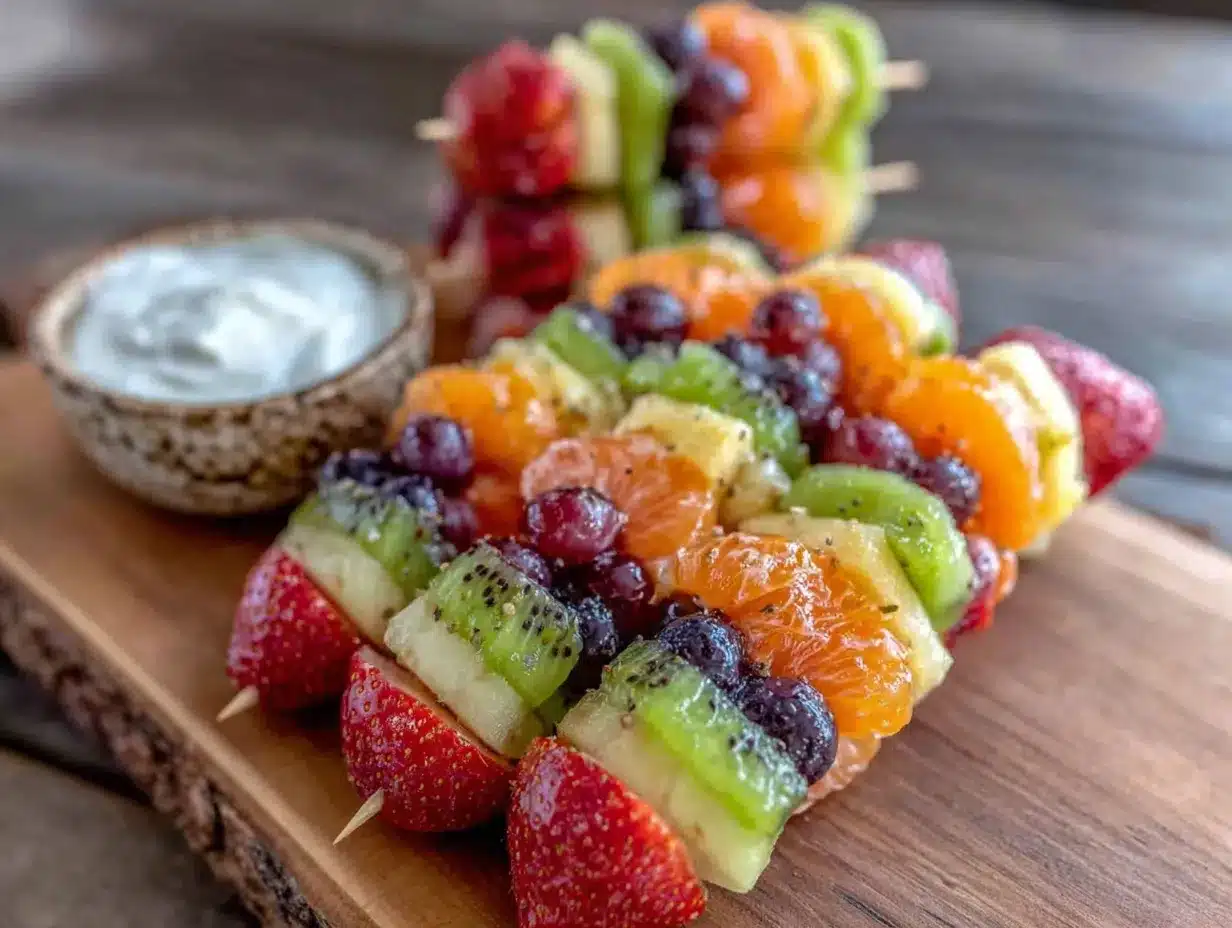
- Kiwi – 2 kiwis, peeled and sliced into rounds or half-moons. I sometimes add these between the green and blue sections for extra color variety.
- Melon balls – 1 cup honeydew or cantaloupe, cut into small balls or cubes. These are great filler fruits that add volume without costing too much.
- Marshmallows – Mini marshmallows can be threaded between fruit pieces for a sweeter treat. I save these for birthday parties rather than school events.
One thing I learned the hard way: avoid bananas and apples unless you’re serving these immediately. They brown way too fast and look sad by the time the party starts. Stick with fruits that hold their color and texture for at least a few hours. Berries, melons, and citrus are your best friends here.
For the skewers themselves, I use 8-inch wooden skewers that I cut in half with kitchen shears. Full-length skewers are too long for small hands and can be dangerous around little faces. If you want to be extra safe, you can find short, rounded skewers specifically designed for kids at most party supply stores.
Equipment Needed
You don’t need much to make these easy rainbow fruit kabobs, which is part of why I love this recipe so much. Here’s what you’ll want to have on hand:
- Wooden skewers – 8-inch skewers cut in half work best. I buy the 100-pack at the grocery store for about three dollars and they last for months. Just remember to snip the sharp points off with scissors if you’re worried about little fingers.
- Cutting board – A large, stable cutting board makes prep much faster. I use a bamboo board that doesn’t dull my knives, but any clean surface works.
- Sharp knife – A good chef’s knife or paring knife for cutting fruit into uniform pieces. Dull knives are actually more dangerous than sharp ones, so keep yours honed.
- Melon baller – Totally optional, but if you’re using melon, this tool makes perfectly round balls that look professional and cute. I got mine for five dollars at Target.
- Colander – For washing berries and grapes. I like using a large colander so I can wash everything at once.
- Paper towels – Drying the fruit thoroughly is crucial. Wet fruit makes the skewers slippery and the kabobs fall apart. I pat everything dry before I start assembling.
- Large platter or sheet pan – For arranging the finished kabobs. A sheet pan lined with parchment paper works great for transporting them to school.
- Kitchen shears – For cutting skewers to size. I keep a dedicated pair just for food prep.
If you don’t have wooden skewers, don’t panic. I’ve used pretzel sticks in a pinch, and they add a nice salty crunch that kids actually love. Just be aware that pretzels can get soggy if the fruit is too wet, so dry your fruit extra well. I’ve also seen people use reusable silicone straws cut into short pieces, which is a great eco-friendly option for home use.
Preparation Method
Alright, let’s get into the actual making of these fruit kabobs. I promise this is easier than it looks, and once you get into a rhythm, you’ll be done before you know it.
- Wash and dry all your fruit (5 minutes). This step is more important than you think. Rinse your strawberries, grapes, blueberries, and any other berries under cool running water. Then lay them out on a clean kitchen towel or paper towels and pat them completely dry. I cannot stress this enough—wet fruit leads to slippery skewers and sad, sliding kabobs. Take the extra minute to dry everything thoroughly.
- Prep your larger fruits (10 minutes). Hull the strawberries and cut them in half lengthwise. If they’re huge, cut them into thirds. You want pieces that are about 1-inch in size so they fit nicely on the skewer. Cut your pineapple into 1-inch chunks. If you’re using fresh oranges, peel them and separate into segments. For melon, use your melon baller or cut into small cubes. The key here is uniformity—pieces that are roughly the same size will make your kabobs look professional and balanced.
- Prepare your skewers (2 minutes). Take your 8-inch wooden skewers and cut them in half with kitchen shears. This gives you 4-inch skewers that are perfect for little hands. If the ends are sharp, snip off the points. I learned this after my daughter poked herself in the lip with a pointy skewer—not a fun conversation with the teacher, let me tell you.
- Arrange your fruit in rainbow order (2 minutes). Before you start threading, lay out your fruit in separate bowls or on a tray in this order: red (strawberries), orange (mandarin segments or orange), yellow (pineapple), green (grapes or kiwi), blue (blueberries), purple (purple grapes or blackberries). This makes the assembly process much faster because you’re not hunting for the right fruit.
- Thread the fruit onto skewers (15-20 minutes). This is the fun part. Start with a piece of red fruit at the bottom of the skewer, leaving about half an inch of the skewer exposed as a handle. Then add orange, yellow, green, blue, and purple in order. Push the pieces close together but not so tight that they squish. For blueberries, thread two or three side by side to create a visible blue section. For smaller fruits like blackberries, you might need to thread them gently so they don’t break apart.
- Check for stability (2 minutes). Once all your kabobs are assembled, give each one a gentle shake. If any fruit pieces wobble, push them a little closer together. The friction between the pieces should hold everything in place. If a kabob feels loose, you can add an extra piece of fruit to fill the gap.
- Arrange on a serving platter (3 minutes). Place the finished kabobs on a large platter or sheet pan lined with parchment paper. I like to arrange them in rows with the fruit facing upward so the rainbow colors are visible. If you’re transporting them to school, cover the platter with plastic wrap and keep it refrigerated until you’re ready to leave.
- Refrigerate until serving (at least 30 minutes). These kabobs actually benefit from a little time in the fridge. The fruit firms up and the flavors meld together slightly. They’ll stay fresh for up to 4 hours in the refrigerator, which makes them perfect for preparing ahead of time.
A quick note about timing: if you’re making these for a school party, I recommend assembling them the morning of the event. They’ll be at their freshest and the fruit won’t have time to weep or dry out. If you need to prep the night before, you can wash and cut all the fruit, store each type in separate containers in the fridge, and then assemble the kabobs in the morning. That’s my go-to strategy for busy school mornings.
Cooking Tips & Techniques
After making these fruit kabobs for what feels like a hundred school events, I’ve picked up some tricks that make the whole process smoother. Let me share what I’ve learned the hard way so you don’t have to.
Uniformity is your friend. I know it sounds fussy, but cutting your fruit into roughly the same size pieces makes a huge difference. When pieces are similar in size, they stack evenly on the skewer and the kabob looks polished. Plus, kids don’t fight over who got the bigger piece. I use a melon baller for melons and cut strawberries lengthwise into halves or thirds depending on their size.
Patience with blueberries. These little guys are the troublemakers of the fruit kabob world. They’re small, round, and want to roll away from you. I’ve found that threading two or three blueberries side by side on the same skewer works better than trying to thread them individually. Just push them gently onto the skewer until they’re snug against each other. If they split, no big deal—just eat that one yourself.
The pretzel stick hack. I mentioned this earlier, but it’s worth repeating. If you’re out of wooden skewers, pretzel sticks are a brilliant substitute. The saltiness contrasts beautifully with the sweet fruit, and kids love the crunch. Just make sure your fruit is very dry so the pretzels don’t get soggy. I’ve also used breadstick-sized pretzels for a sturdier option.
The soggy fruit problem. Here’s something nobody tells you: fruit kabobs can get watery if they sit too long. The culprit is usually melon or pineapple, which release moisture as they sit. To prevent this, pat your cut fruit dry with paper towels before assembling. I also avoid cutting fruit too far in advance—within 24 hours is fine, but any longer and you’re asking for trouble.
My biggest failure. I once made these for a Valentine’s Day party and used wooden skewers that were way too long. I didn’t cut them in half because I was in a hurry. The kids ended up poking each other with the sharp ends, and one boy accidentally stabbed himself in the cheek. No serious injury, but the teacher gave me a very pointed look. Now I always cut my skewers in half and snip the points off. Lesson learned.
Timing strategy for busy mornings. If you’re like me and mornings are chaos, prep everything the night before. Wash and cut your fruit, store each type in separate containers in the fridge, and have your skewers ready to go. In the morning, all you have to do is thread the fruit. It takes about 10 minutes and you can do it while your coffee is brewing.
Variations & Adaptations
One of the best things about these fruit kabobs is how adaptable they are. You can change them up based on what’s in season, what your kids like, or what theme your party has. Here are some variations I’ve tried and loved:
Seasonal variations. In the summer, I swap in fresh peaches, nectarines, and watermelon for a totally different flavor profile. In the fall, I add apple chunks (dipped in lemon water to prevent browning) and pear slices. Winter is great for pomegranate seeds and persimmon. Spring brings fresh cherries and apricots. The rainbow concept works with any colorful fruit, so feel free to get creative.
Dietary adaptations. These kabobs are naturally gluten-free, dairy-free, and vegan, which makes them perfect for classrooms with dietary restrictions. If you’re serving kids with allergies, just make sure you’re using fresh fruit and not canned fruit that might have added sugars or preservatives. For a lower-sugar option, focus on berries and citrus instead of tropical fruits like pineapple and mango.
Themed kabobs. For Halloween, I use orange and black fruits like mandarin oranges and blackberries. For Christmas, red and green is the way to go—strawberries, raspberries, green grapes, and kiwi. For Fourth of July, red, white, and blue with strawberries, banana slices (dipped in lemon juice), and blueberries. The possibilities are endless and kids love seeing the theme come to life.
Dip it. Sometimes I serve these kabobs with a side of yogurt dip or chocolate sauce. A simple Greek yogurt dip with a little honey and vanilla extract is always a hit. For a more indulgent option, melt some dark chocolate and let kids dip their kabobs. Just be prepared for chocolate-covered fingers—it’s worth it.
My personal favorite variation. I once made these for a luau-themed party and added tiny paper umbrellas to each kabob. The kids went absolutely wild. I also threaded mini marshmallows between the fruit pieces for an extra special treat. It’s not the healthiest version, but for a birthday party, it’s totally worth the sugar rush.
Serving & Storage Suggestions
These fruit kabobs are best served chilled or at room temperature, which makes them perfect for school parties where refrigeration might not be available. Here’s how I handle serving and storage:
Serving temperature. I prefer to serve these kabobs straight from the refrigerator. The cold fruit is refreshing and holds its shape better. If you’re taking them to a school party, keep them in a cooler or insulated bag with an ice pack until it’s time to serve. They’ll stay fresh for about 2 hours at room temperature, so don’t worry if they sit out during the party.
Presentation tips. Arrange the kabobs on a large platter with the fruit ends facing up so the rainbow colors are visible. I like to alternate the direction of the kabobs so they look like a colorful fan. You can also stand them upright in a tall glass or jar for a more dramatic presentation. For school parties, I keep it simple—a flat platter with the kabobs arranged in rows is easy for little hands to grab.
What to serve with them. These kabobs pair beautifully with other party foods. I often serve them alongside mini sandwiches, veggie cups, or cheese sticks for a balanced snack. For a dessert table, they’re great with cupcakes or cookies. And if you’re making them for a brunch event, try them with yogurt parfaits or muffins.
Storage instructions. If you have leftovers (which is rare in my house), store them in an airtight container in the refrigerator for up to 24 hours. The fruit will start to dry out after that, and the skewers might get a little sticky. I don’t recommend freezing these kabobs—the fruit texture changes dramatically when thawed and becomes mushy.
Reheating? These are meant to be served cold or at room temperature, so no reheating needed. If you’ve stored them in the fridge, just let them sit at room temperature for about 10 minutes before serving to take the chill off.
Flavor development. Honestly, these kabobs are best fresh. The fruit is crispiest and most flavorful right after assembly. That said, they’ll still taste good for several hours. The flavors do meld together slightly over time, which can be nice—the berries release a little juice that coats the other fruits. Just don’t expect them to be as vibrant after a full day in the fridge.
Nutritional Information & Benefits
Let’s talk about why these fruit kabobs are actually good for you, because we all love a treat that feels indulgent but is secretly healthy. Here’s a rough breakdown per kabob (assuming 6 pieces of fruit per skewer):
Estimated nutritional values per kabob: Approximately 60-80 calories, 15-20 grams of carbohydrates, 2-3 grams of fiber, and less than 1 gram of fat. These numbers will vary based on the specific fruits you use, but overall, these are a low-calorie, nutrient-dense snack.
Health benefits of key ingredients: Strawberries are packed with vitamin C and antioxidants that support immune health. Blueberries are known for their brain-boosting properties and are loaded with flavonoids. Pineapple contains bromelain, an enzyme that aids digestion. Grapes provide resveratrol, which is great for heart health. And oranges are famous for their immune-supporting vitamin C content.
Dietary considerations: These kabobs are naturally gluten-free, dairy-free, egg-free, nut-free, and vegan. They’re also low in added sugars—the sweetness comes entirely from the fruit itself. This makes them an excellent choice for classrooms with multiple dietary restrictions. Just be aware that some kids might have oral allergy syndrome with certain raw fruits, so it’s always good to check with parents beforehand.
Potential allergens: Fresh fruit is generally safe for most kids, but cross-contamination can happen if you’re using cutting boards or knives that have touched allergens. I keep a separate cutting board just for fruit prep to avoid any issues. Also, some commercial fruit washes contain additives that might trigger sensitivities, so I stick with plain water rinsing.
My personal wellness perspective: I love that these kabobs let kids indulge in something sweet without the sugar crash that comes with processed treats. They’re colorful, fun, and genuinely good for you. I’ve seen kids who normally refuse to eat fruit gobble these up because the presentation makes them feel special. And as a parent, that’s a win-win in my book.
Conclusion
These easy rainbow fruit kabobs have become my secret weapon for school parties, and I honestly can’t imagine going back to store-bought fruit trays or pre-packaged snacks. They’re simple enough to throw together on a busy morning, beautiful enough to impress other parents, and delicious enough that kids actually eat them. What more could you ask for?
I love that this recipe is completely customizable. You can swap in whatever fruits your kids love or whatever’s on sale at the grocery store. You can make them for a Valentine’s Day party, a summer barbecue, or just a regular Tuesday afternoon snack. The rainbow theme works for any occasion, and the possibilities are endless.
I’d love to hear how these turn out for you. Did your kids love them? Did you try a fun variation? Drop a comment below and let me know—I read every single one and I’m always looking for new ideas to try. And if you found this helpful, please share it with another parent who’s stressing about the next school party. We’re all in this together, and honestly, the more fruit kabobs in the world, the better.
Happy snacking, and remember—you’ve got this. Even if you’re assembling these at 7 AM with a coffee in one hand and a skewer in the other, you’re doing great. Your kids are lucky to have you.
Frequently Asked Questions
How far in advance can I make fruit kabobs?
I recommend making them the same day you plan to serve them, ideally within 4 hours of serving. If you need to prep ahead, wash and cut the fruit the night before, store each type in separate containers in the fridge, and assemble the kabobs in the morning. This keeps the fruit fresh and prevents the skewers from getting soggy.
Can I use frozen fruit for these kabobs?
You can, but I don’t recommend it for school parties. Frozen fruit releases a lot of water as it thaws, which makes the kabobs slippery and messy. If you’re in a pinch, thaw the fruit completely and pat it very dry with paper towels before threading. Fresh fruit is always better for texture and presentation.
How do I keep fruit from browning on the kabobs?
Stick with fruits that don’t brown easily—berries, citrus, melon, grapes, and pineapple are all great choices. If you want to include apples or pears, dip them in a mixture of lemon juice and water (about 1 tablespoon lemon juice per cup of water) before threading. This prevents oxidation and keeps them looking fresh.
What size skewers are safe for kids?
I use 4-inch skewers for school parties. You can buy 8-inch skewers and cut them in half with kitchen shears, then snip off the sharp points. Some party supply stores sell short, rounded skewers specifically designed for children. Always supervise young kids when they’re eating food on sticks, just to be safe.
Can I make these kabobs without skewers?
Absolutely! If you don’t have skewers or prefer not to use them, you can arrange the fruit in rainbow order on a platter or in a bento box. Kids can eat the fruit with their hands or use toothpicks. You can also serve the fruit in small cups layered by color for a parfait-style presentation that’s just as fun.
Pin This Recipe!
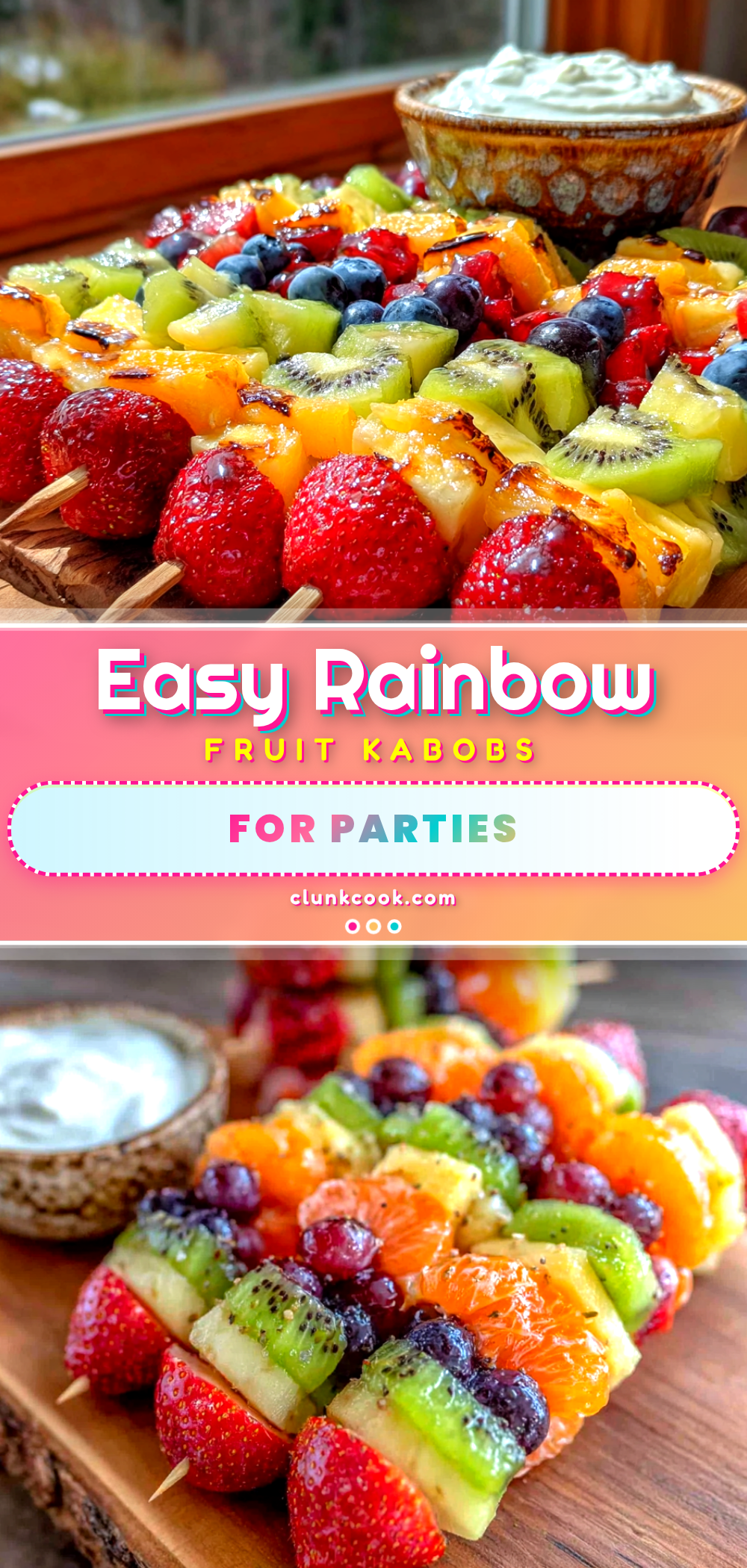
Easy Rainbow Fruit Kabobs: Perfect School Party Treat
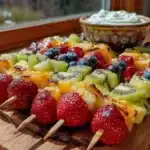
These easy rainbow fruit kabobs are a quick, healthy, and mess-free treat perfect for school parties. With just 20 minutes of prep, you can create a colorful, kid-friendly snack that’s naturally gluten-free, dairy-free, and vegan.
- Prep Time: 20 minutes
- Cook Time: 0 minutes
- Total Time: 20 minutes
- Yield: 12 servings 1x
- Category: Snack
- Cuisine: American
Ingredients
- 1 pound strawberries, hulled and halved (or quartered if large)
- 1 can (15 ounces) mandarin oranges, drained well, or 2 fresh oranges, peeled and segmented
- 2 cups fresh pineapple, cut into 1-inch chunks
- 2 cups seedless green grapes, washed and dried
- 1 pint fresh blueberries, washed and dried
- 1 cup purple grapes or 1 container blackberries
- Optional: 2 kiwis, peeled and sliced into rounds or half-moons
- Optional: 1 cup honeydew or cantaloupe, cut into small balls or cubes
- Optional: Mini marshmallows
Instructions
- Wash and dry all fruit thoroughly. Pat dry with paper towels to prevent slippery skewers.
- Prep larger fruits: hull strawberries and cut into 1-inch pieces; cut pineapple into 1-inch chunks; peel and segment oranges if using fresh; cut melon into small cubes or use a melon baller.
- Prepare skewers: cut 8-inch wooden skewers in half with kitchen shears to make 4-inch skewers. Snip off sharp points for safety.
- Arrange fruit in rainbow order: red (strawberries), orange (mandarin segments), yellow (pineapple), green (grapes or kiwi), blue (blueberries), purple (purple grapes or blackberries).
- Thread fruit onto skewers in rainbow order, starting with red at the bottom (leave about 1/2 inch exposed as a handle). Push pieces close together but not too tight. For blueberries, thread 2-3 side by side.
- Check each kabob for stability; gently shake to ensure pieces are secure. Adjust if needed.
- Arrange kabobs on a large platter or sheet pan lined with parchment paper, with fruit facing upward to show rainbow colors.
- Refrigerate for at least 30 minutes before serving. Best served within 4 hours of assembly.
Notes
Avoid bananas and apples as they brown quickly. For best results, assemble kabobs the morning of the event. If using pretzel sticks as skewers, ensure fruit is very dry to prevent sogginess. Always supervise young children when eating food on sticks.
Nutrition
- Serving Size: 1 kabob
- Calories: 70
- Sugar: 12
- Sodium: 2
- Fat: 0.5
- Carbohydrates: 17
- Fiber: 3
- Protein: 1
Keywords: fruit kabobs, rainbow fruit skewers, school party treats, healthy snacks for kids, easy fruit appetizers, no-cook recipe, gluten-free snack, vegan snack