Love this? Save it for later!
Share the inspiration with your friends
It was 11:47 PM on a random Wednesday in early April, and I was completely, utterly hooked on the idea of something bright and buttery. I didn’t have the fresh salmon I usually buy from the fish counter, but I had two frozen fillets in the back of the freezer, a sad-looking lemon, and a half-used stick of butter. And that’s when the idea hit me—lemon dill butter. I mean, honestly, I’d made compound butter before, but never at nearly midnight on a work night. There’s something about the quiet of the kitchen at that hour. No distractions, no one asking what’s for dinner. Just me, the hum of the oven, and a craving I couldn’t shake.
I thawed the salmon under cold running water—a trick my mom taught me that still feels a little like cheating—and started mixing. The dill was from that sad, wilted bunch in the fridge, but it still smelled like spring. I chopped it up, mashed it into the softened butter with lemon zest, salt, and a tiny pinch of garlic powder. I slathered it on the salmon like I had nothing to lose. And you know what? It was perfect. The butter melted into a glossy, fragrant sauce as it baked, and the salmon came out flaky and tender in under 20 minutes. I ate it standing at the counter, fork in one hand, phone in the other, scrolling through old photos. That night, I knew this recipe was a keeper. It’s the kind of meal that feels fancy but takes almost no effort—the best kind of weeknight magic.
Why You’ll Love This Recipe
Let me tell you, this spring baked salmon with lemon dill butter has become my go-to for those evenings when I want something that feels special but I’m too tired to fuss. I’ve tested it at least a dozen times now, tweaking the butter ratio and the bake time, and I can honestly say this version is the one. Here’s why you’re going to love it:
- Quick & Easy: From fridge to table in under 25 minutes. Seriously. It’s faster than ordering takeout, and way more satisfying.
- Simple Ingredients: You probably have everything in your kitchen right now. Butter, lemon, dill, salt, pepper, and salmon. That’s it.
- Perfect for Spring: This dish screams “spring” in the best way. It’s light, fresh, and pairs beautifully with asparagus, peas, or a simple green salad.
- Crowd-Pleaser: I’ve served this to picky eaters, seafood skeptics, and my dad who “doesn’t like fish.” Everyone goes back for seconds.
- Unbelievably Delicious: The lemon dill butter melts into the salmon, creating this rich, tangy sauce that coats every bite. It’s comfort food that feels light.
What makes this recipe different from the rest? It’s the butter-to-herb ratio, honestly. I spent three batches getting it right—too much dill and it tastes like a pickle, too little and you miss the point. This version is balanced, bright, and buttery without being greasy. Plus, baking the salmon on a sheet pan means zero splatter and easy cleanup. It’s not just another salmon recipe; it’s the one you’ll bookmark and make on repeat.
What Ingredients You Will Need
This recipe uses simple, wholesome ingredients to deliver bold flavor and satisfying texture without the fuss. Most of these are pantry staples, especially if you keep a well-stocked fridge. Let’s break it down.
- Salmon Fillets (4 fillets, about 6 oz each): I prefer wild-caught salmon when I can find it—it has a firmer texture and a cleaner flavor. But honestly, good-quality farmed salmon works beautifully here too. Look for fillets that are evenly thick so they cook at the same rate. If your fillets are frozen, just thaw them in the fridge overnight or under cold running water for 30 minutes.
- Unsalted Butter (4 tablespoons, softened): The star of the show. Unsalted butter lets you control the salt level, which is key because the salmon itself is already seasoned. I use Kerrygold or Plugrá for the best flavor, but any good butter works. Let it soften at room temperature for about 20 minutes before mixing.
- Fresh Dill (2 tablespoons, finely chopped): Fresh dill is non-negotiable here. Dried dill just doesn’t have the same bright, grassy flavor. I buy a bunch and use the rest in salads or on roasted potatoes. If you’re in a pinch, you can use 1 teaspoon of dried dill, but the fresh stuff really makes this sing.
- Lemon (1 large): You’ll need both the zest and the juice. Zest the lemon before you juice it—trust me, it’s a pain to zest a juiced lemon. The zest adds intense citrus flavor without the acidity, while the juice brightens everything up. Use a Microplane for the zest if you have one.
- Garlic (1 small clove, minced): Just a tiny bit. You don’t want garlic to overpower the dill and lemon. I grate mine on a Microplane so it melts into the butter. If you’re not a garlic fan, feel free to skip it.
- Salt and Black Pepper: Use flaky sea salt like Maldon for finishing, and kosher salt for seasoning before baking. Freshly cracked black pepper makes a difference—skip the pre-ground stuff.
- Optional Garnishes: Extra fresh dill sprigs, lemon slices, and a pinch of flaky salt right before serving. These make the dish look gorgeous with almost zero effort.
One thing I’ve learned: the quality of your salmon matters more than anything else here. If you can, buy from a fish counter where you can smell it. It should smell like the ocean, not fishy. And don’t be afraid to ask for the belly cut—it’s richer and more flavorful.
Equipment Needed
You don’t need a fancy kitchen to make this recipe. Here’s what you’ll need:
- Baking Sheet or Oven-Safe Dish: A rimmed baking sheet is ideal because it catches any butter that melts off. I use a half-sheet pan from Nordic Ware—it’s sturdy and doesn’t warp. A 9×13-inch baking dish works too.
- Parchment Paper or Aluminum Foil: For easy cleanup. I line my sheet with parchment paper because the salmon doesn’t stick, and I can just toss the paper when I’m done.
- Small Bowl: For mixing the lemon dill butter. Any small bowl will do.
- Microplane or Zester: Not essential, but it makes zesting the lemon so much easier. A fine grater works too.
- Chef’s Knife and Cutting Board: For chopping the dill and mincing the garlic. A sharp knife makes all the difference.
- Fish Spatula (optional): A thin, slotted spatula is perfect for lifting the salmon off the pan without it falling apart. But a regular spatula works fine.
If you don’t have a Microplane, you can use the small side of a box grater for the lemon zest. And if you don’t have a fish spatula, just be gentle when transferring the salmon—it’s delicate when cooked.
Preparation Method
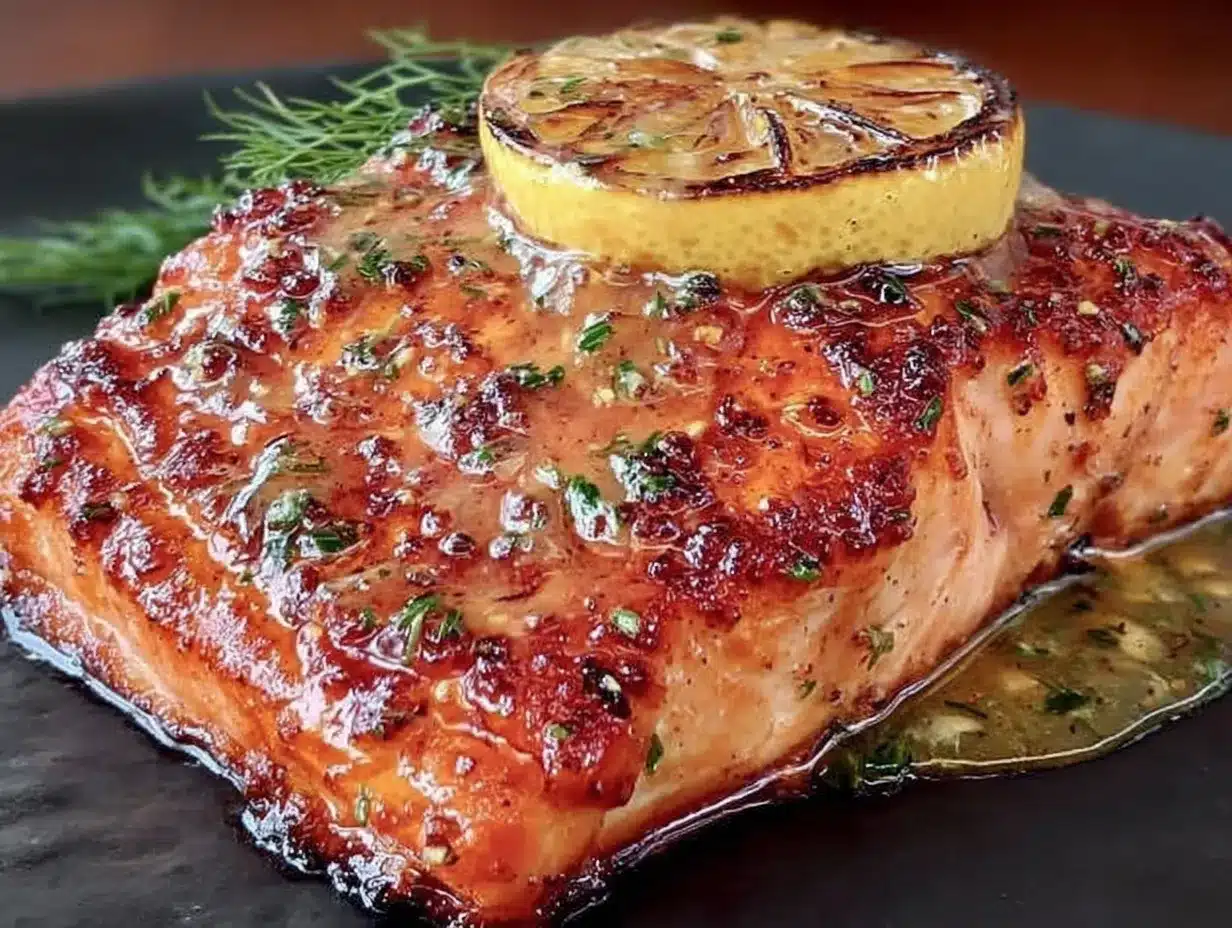
Let’s get cooking. This whole process takes about 25 minutes, and most of that is hands-off oven time. Here’s how to do it.
- Preheat the oven to 400°F (200°C). Position the rack in the center of the oven. While it’s heating, line a baking sheet with parchment paper or foil. This makes cleanup a breeze.
- Make the lemon dill butter. In a small bowl, combine 4 tablespoons of softened unsalted butter, 2 tablespoons of finely chopped fresh dill, the zest of 1 lemon, 1 teaspoon of fresh lemon juice, 1 small minced garlic clove, and a pinch of salt and pepper. Mash everything together with a fork until it’s well combined and slightly fluffy. Taste it—it should be bright and herbaceous. If it tastes flat, add another pinch of salt. Set aside.
- Prepare the salmon. Pat the salmon fillets dry with paper towels. This is important—dry skin means better browning. Place the fillets skin-side down on the prepared baking sheet, spacing them at least an inch apart. Season the tops with salt and pepper.
- Top with the butter. Divide the lemon dill butter evenly among the fillets, spreading it over the tops. Don’t worry if it’s not perfectly smooth—it will melt and spread as it bakes. I like to leave a few small clumps of butter because they create little pools of flavor.
- Bake the salmon. Place the baking sheet in the preheated oven and bake for 12-15 minutes, depending on the thickness of your fillets. For 1-inch thick fillets, 13 minutes is usually perfect. The salmon is done when it flakes easily with a fork and the internal temperature reaches 145°F (63°C). The butter will be bubbly and golden.
- Optional: Broil for color. If you want a slightly browned top, switch the oven to broil for the last 1-2 minutes. Watch it closely—butter can burn quickly under the broiler.
- Rest and serve. Let the salmon rest on the pan for 2 minutes. This allows the juices to redistribute. Transfer to plates, spoon any leftover butter from the pan over the top, and garnish with fresh dill sprigs and lemon slices. Serve immediately.
One thing I always do: I check the thickest part of the fillet with a fork. If it flakes easily and looks opaque, it’s done. Overcooked salmon is dry and sad, so err on the side of slightly underdone—it will continue cooking from residual heat.
Cooking Tips & Techniques
I’ve made this recipe enough times to know where things can go wrong. Here are my best tips for perfect salmon every time.
Don’t skip patting the salmon dry. This is the number one mistake I see. Wet salmon steams instead of bakes, and you lose that nice, tender texture. A paper towel is your best friend here.
Use room-temperature butter. Cold butter won’t spread evenly on the salmon. Let it sit out for 20 minutes before mixing. If you forgot, microwave it for 5 seconds at a time until it’s soft but not melted.
Watch the bake time closely. Salmon goes from perfect to overdone in about 60 seconds. I set a timer for 12 minutes and check it. If it needs more time, I add 1-minute increments. The residual heat from the pan will keep cooking it even after you pull it out.
Line your pan. I learned this the hard way. The first time I made this, I didn’t use parchment, and the butter burned onto the pan. It took forever to scrub off. Parchment paper or foil saves you that headache.
Season the salmon before adding the butter. A little salt and pepper directly on the fish ensures every bite is seasoned, not just the top layer. I use kosher salt because it dissolves evenly.
Let it rest. I know it’s tempting to dig in right away, but letting the salmon rest for 2 minutes makes it juicier. The juices settle, and the butter sauce thickens slightly. Trust me on this one.
Variations & Adaptations
This recipe is incredibly flexible. Here are some ways to switch it up based on what you have or what you’re craving.
- Herb Swap: Not a dill fan? Use fresh parsley, chives, or tarragon instead. Tarragon and lemon are a classic pairing—it’s a bit more sophisticated but still springy. I’ve also used basil in the summer, and it’s fantastic.
- Citrus Twist: Swap the lemon for lime or orange. Lime dill butter is amazing with a slightly different vibe—more tropical. Orange zest adds sweetness that pairs well with a pinch of red pepper flakes for heat.
- Garlic Lovers: Add an extra clove of garlic, or use roasted garlic for a mellower, sweeter flavor. Roast a whole head of garlic ahead of time and mash it into the butter.
- Dairy-Free Version: Use vegan butter or coconut oil instead of butter. Coconut oil with lemon and dill is surprisingly good—just make sure it’s softened, not melted. I’ve tested this with Miyoko’s vegan butter, and it works perfectly.
- Spicy Kick: Add a pinch of red pepper flakes or a tiny bit of smoked paprika to the butter. The heat cuts through the richness beautifully. I did this once when I had a cold, and it was exactly what I needed.
- Different Fish: This butter works on any firm white fish—cod, halibut, or sea bass. Adjust the bake time based on thickness. For thin fillets like trout, check at 8 minutes.
One variation I tried last spring was adding a tablespoon of capers to the butter. It added this briny pop that was incredible with the dill. Definitely try it if you have capers in the fridge.
Serving & Storage Suggestions
This salmon is best served fresh out of the oven, but here’s how to make it work for your schedule.
Serving Temperature: Serve the salmon warm, straight from the oven. The butter should be melted and glossy. If it cools down, the butter will solidify, so eat it within 10 minutes of baking.
What to Serve With It: This salmon pairs beautifully with spring vegetables. Roasted asparagus with lemon, sautéed snap peas, or a simple arugula salad with shaved Parmesan. For a heartier meal, serve it over rice, quinoa, or mashed potatoes to soak up the butter sauce. I also love it with crusty bread for dipping.
Storage: Leftover salmon keeps in the fridge for up to 3 days in an airtight container. The butter will solidify, but that’s fine. To reheat, place the salmon in a 300°F (150°C) oven for 5-7 minutes, or microwave it in 30-second bursts. Be careful not to overcook it—reheated salmon dries out quickly.
Freezing: You can freeze the baked salmon for up to 2 months. Wrap each fillet tightly in plastic wrap and then foil. Thaw in the fridge overnight and reheat gently. The texture won’t be as perfect as fresh, but it’s still good for a quick meal.
Flavor Development: The lemon dill butter actually gets more flavorful after a day in the fridge. The herbs and citrus meld together. If you’re meal-prepping, you can make the butter up to 3 days ahead and keep it in the fridge. Just soften it slightly before spreading on the salmon.
Nutritional Information & Benefits
This recipe is as healthy as it is delicious. Here’s the nutritional breakdown per serving (one fillet with butter):
| Nutrient | Amount |
|---|---|
| Calories | ~380 |
| Protein | 35g |
| Fat | 26g |
| Saturated Fat | 12g |
| Carbohydrates | 1g |
| Fiber | 0g |
| Sugar | 0g |
| Sodium | ~400mg |
Health Benefits: Salmon is packed with omega-3 fatty acids, which are great for heart and brain health. It’s also an excellent source of high-quality protein and vitamin D. Dill is rich in antioxidants and has been used for digestion support. Lemon provides vitamin C and adds brightness without extra calories.
Dietary Considerations: This recipe is naturally gluten-free, low-carb, and keto-friendly. If you’re watching your sodium, use unsalted butter and go easy on the added salt. For a lower-fat version, reduce the butter to 2 tablespoons—it will still be flavorful, just less rich.
Allergens: Contains fish and dairy (butter). For a dairy-free option, use vegan butter or olive oil.
I love that this recipe feels indulgent but is actually really good for you. It’s the kind of meal that makes you feel energized, not sluggish.
Conclusion
This spring baked salmon with lemon dill butter is the recipe I keep coming back to, and for good reason. It’s quick, it’s easy, and it tastes like you spent way more effort than you actually did. The combination of bright lemon, fresh dill, and rich butter is pure spring magic—it’s light enough for a warm evening but satisfying enough to feel like a real meal.
I hope you give it a try, and I hope you make it your own. Maybe you’ll add capers like I did, or swap the dill for tarragon. Maybe you’ll serve it with roasted potatoes instead of asparagus. Whatever you do, I’d love to hear about it. Drop a comment below and let me know how it turned out—did you make any changes? Did your family love it? I read every comment, and your stories are what keep me coming back to the kitchen.
Until next time, happy cooking. And remember: sometimes the best recipes come from a late-night craving and a half-used stick of butter.
Frequently Asked Questions
Can I use frozen salmon for this recipe?
Yes, absolutely. Just thaw it completely in the fridge overnight or under cold running water for 30 minutes. Pat it dry before seasoning—frozen salmon tends to release more water, so drying is extra important.
How do I know when the salmon is done?
The easiest way is to check with a fork. Gently flake the thickest part of the fillet—if it flakes easily and looks opaque, it’s done. An instant-read thermometer should read 145°F (63°C) at the thickest point.
Can I make the lemon dill butter ahead of time?
Yes! You can make the butter up to 3 days ahead and keep it in the fridge. Let it come to room temperature for 20 minutes before spreading on the salmon. You can also freeze the butter for up to 3 months—just wrap it tightly in plastic wrap.
What if I don’t have fresh dill?
Fresh dill is best, but you can use 1 teaspoon of dried dill in a pinch. The flavor won’t be as bright, so consider adding a little extra lemon zest to compensate. Or try fresh parsley or chives instead.
Can I cook this on the grill instead of the oven?
Definitely. Preheat your grill to medium-high heat. Place the salmon skin-side down on a well-oiled grill grate or a piece of foil. Cook for 10-12 minutes with the lid closed, until it flakes easily. The butter will melt and create a nice crust.
Pin This Recipe!
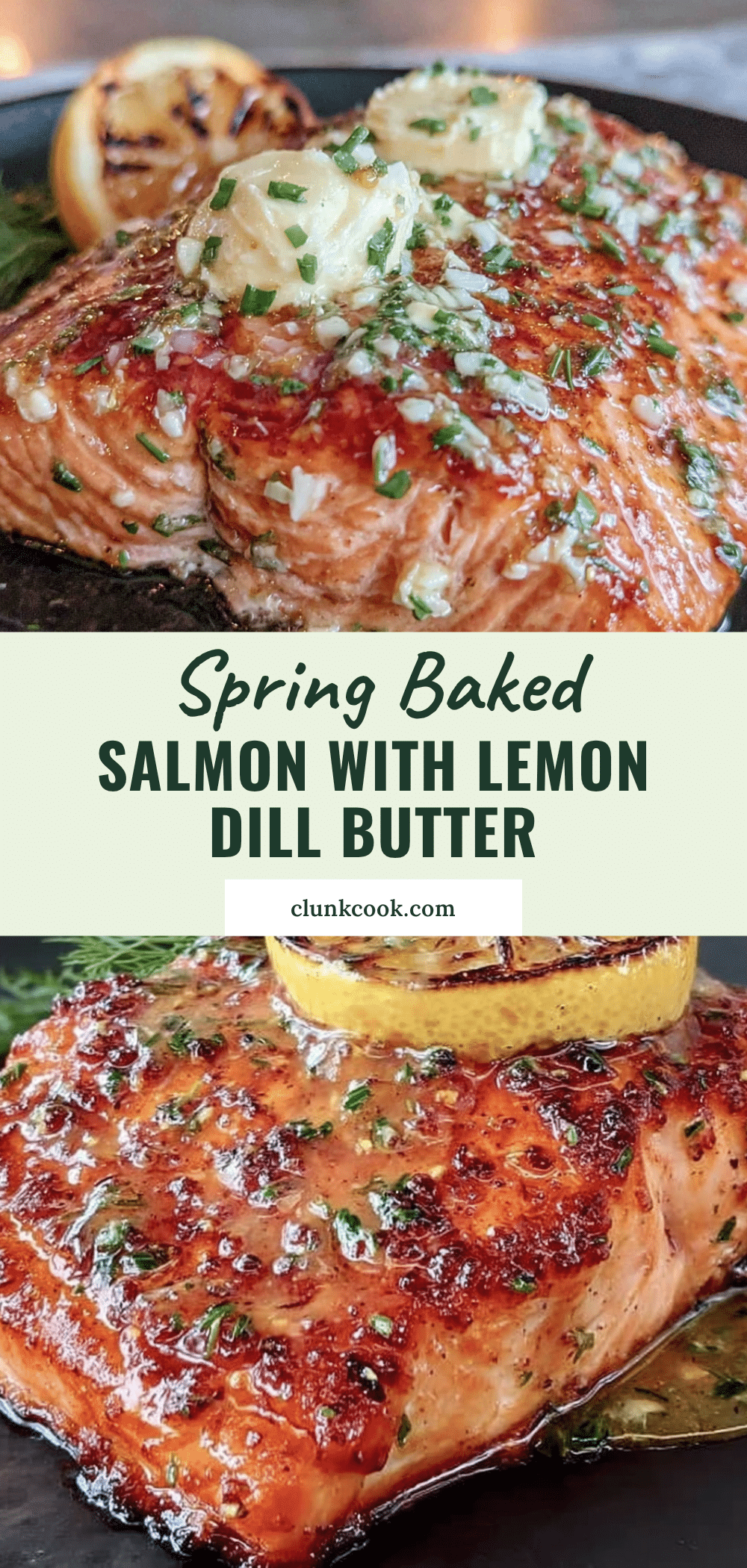
Easy Spring Baked Salmon with Lemon Dill Butter
This quick and easy baked salmon is topped with a bright, herbaceous lemon dill butter that melts into a glossy sauce as it bakes. Ready in under 25 minutes, it’s the perfect weeknight dinner that feels fancy with minimal effort.
- Prep Time: 10 minutes
- Cook Time: 15 minutes
- Total Time: 25 minutes
- Yield: 4 servings 1x
- Category: Main Course
- Cuisine: American
Ingredients
- 4 salmon fillets (about 6 oz each)
- 4 tablespoons unsalted butter, softened
- 2 tablespoons fresh dill, finely chopped
- 1 large lemon (zest and juice)
- 1 small garlic clove, minced
- Salt and black pepper to taste
- Optional: fresh dill sprigs and lemon slices for garnish
Instructions
- Preheat the oven to 400°F (200°C). Line a baking sheet with parchment paper or foil.
- In a small bowl, combine softened butter, chopped dill, lemon zest, 1 teaspoon lemon juice, minced garlic, and a pinch of salt and pepper. Mash with a fork until well combined and slightly fluffy. Taste and adjust seasoning.
- Pat salmon fillets dry with paper towels. Place skin-side down on the prepared baking sheet, spacing them at least an inch apart. Season tops with salt and pepper.
- Divide the lemon dill butter evenly among the fillets, spreading over the tops. Leave a few small clumps for flavor pools.
- Bake for 12-15 minutes, depending on thickness (13 minutes for 1-inch thick fillets). Salmon is done when it flakes easily with a fork and internal temperature reaches 145°F (63°C).
- Optional: Switch oven to broil for the last 1-2 minutes for a browned top. Watch closely to prevent burning.
- Let salmon rest on the pan for 2 minutes. Transfer to plates, spoon leftover butter from the pan over the top, and garnish with fresh dill sprigs and lemon slices. Serve immediately.
Notes
Pat the salmon dry for better texture. Use room-temperature butter for easy spreading. Watch the bake time closely to avoid overcooking. Let the salmon rest for 2 minutes before serving for juicier results. The lemon dill butter can be made up to 3 days ahead and stored in the fridge.
Nutrition
- Serving Size: 1 fillet with butter
- Calories: 380
- Sodium: 400
- Fat: 26
- Saturated Fat: 12
- Carbohydrates: 1
- Protein: 35
Keywords: baked salmon, lemon dill butter, spring salmon, easy salmon recipe, weeknight dinner, healthy salmon, gluten-free, low-carb