Love this? Save it for later!
Share the inspiration with your friends
Introduction
“You can’t rush a good pound cake,” my neighbor, Mrs. Ellen, told me one summer afternoon as I watched her effortlessly whip up a batch of what she called her “Sunday best” dessert. I wasn’t expecting much from a simple cake recipe she pulled out from a stained, handwritten card tucked inside her recipe box, but honestly, that first bite changed how I think about pound cake forever. It wasn’t just the butteriness or the moist crumb—it was something about the way the flavors settled on my tongue that felt like a warm hug on a rainy day.
Mrs. Ellen wasn’t a professional baker, just someone who loved her kitchen and had perfected this classic homemade grandma’s pound cake recipe over decades, tweaking it quietly behind closed doors. I remember the little kitchen mishap when she forgot to preheat the oven (typical!), yet the cake still turned out beautifully golden with that tender crumb that melts in your mouth. Maybe you’ve been there—scrambling a bit but ending up with something unexpectedly wonderful. That’s the magic of this pound cake.
Since that day, I’ve made this recipe my go-to for cozy gatherings, afternoon teas, or just when I need a reliable, comforting treat. It’s not fancy, it doesn’t call for exotic ingredients, and yet it delivers a buttery richness that feels timeless. If you’re looking for a classic homemade grandma’s pound cake with moist, buttery crumb that’s easy to nail every time, let me tell you—this one’s a keeper.
Why You’ll Love This Recipe
- Quick & Easy: Comes together in under 20 minutes of prep—perfect for last-minute dessert cravings.
- Simple Ingredients: Uses pantry staples like butter, sugar, eggs, and flour—no fancy trips needed.
- Perfect for Any Occasion: Whether it’s a family dinner or a cozy weekend coffee break, this cake fits right in.
- Crowd-Pleaser: Always gets compliments for its buttery flavor and tender crumb from both kids and adults.
- Unbelievably Delicious: The moist, buttery texture is what sets it apart—no dry edges or crumbly bites here.
What makes this recipe stand out? It’s the balance of ingredients and a small secret step I learned from Mrs. Ellen—beating the butter and sugar just right to trap air for a fluffy rise, plus baking at a precise temperature that gives the crust a delicate golden finish without drying the inside. I’ve tried other pound cakes before, but this one has that nostalgic soul, the kind that makes you close your eyes after the first bite and say, “Yeah, this is the one.” Honestly, it feels like comfort food made simple and perfect.
What Ingredients You Will Need
This recipe uses simple, wholesome ingredients to deliver a bold, buttery flavor and satisfyingly moist crumb without any fuss. Most are pantry staples, and you probably already have them on hand.
- Unsalted butter, softened (about 1 cup or 226 grams) – I prefer Land O’Lakes for a rich, creamy texture.
- Granulated sugar (1 1/2 cups or 300 grams) – regular white sugar works perfectly.
- Large eggs, room temperature (4 eggs) – they help with smooth batter and light crumb.
- All-purpose flour (2 cups or 250 grams), sifted – for a tender yet sturdy crumb.
- Baking powder (1 1/2 teaspoons) – helps the cake rise gently.
- Salt (1/4 teaspoon) – balances the sweetness and highlights the butter.
- Whole milk (1/2 cup or 120 ml), room temperature – adds moisture and richness.
- Vanilla extract (1 teaspoon) – for that classic, warm aroma.
Substitution notes: Use almond flour for a gluten-free version, but expect a denser crumb. Swap whole milk with coconut milk if you want a subtle tropical hint and dairy-free option. For extra flavor, a tablespoon of fresh lemon zest brightens the cake beautifully.
Equipment Needed
- 9×5-inch loaf pan (or a Bundt pan for a different look) – I recommend greasing it thoroughly and lining with parchment paper for easy removal.
- Electric hand mixer or stand mixer – makes creaming butter and sugar effortless; I’ve tried a whisk by hand, but it takes forever!
- Mixing bowls – a medium and a large one to keep things organized.
- Sifter or fine mesh sieve – to aerate the flour and baking powder.
- Measuring cups and spoons – for accuracy.
- Rubber spatula – great for folding and scraping the batter.
If you don’t have a stand mixer, don’t worry—an electric hand mixer works just fine. For those on a budget, a whisk and some elbow grease will do the trick, though it may take a little longer to get the butter and sugar fluffy. I’ve found that keeping the butter at room temperature helps the creaming process go smoothly without lumps.
Preparation Method
- Preheat your oven to 325°F (163°C). Grease your loaf pan with butter and line it with parchment paper, letting some overhang for easy cake removal later. This takes about 10 minutes including prep.
- Cream the butter and sugar: In a large mixing bowl, beat 1 cup (226 grams) softened unsalted butter and 1 1/2 cups (300 grams) granulated sugar using an electric mixer on medium speed. This should take about 5 minutes until the mixture is light, pale, and fluffy. You’ll notice the texture turn almost mousse-like—that’s the air trapping, which helps the cake rise beautifully.
- Add eggs one at a time: Crack in 4 large eggs (room temperature), beating well after each addition. This ensures the batter emulsifies properly and stays smooth. If the batter looks like it’s curdling a bit, don’t panic—it will come back when you add the flour.
- Mix dry ingredients: In a separate bowl, sift together 2 cups (250 grams) all-purpose flour, 1 1/2 teaspoons baking powder, and 1/4 teaspoon salt. Sifting helps to avoid lumps and distributes the baking powder evenly.
- Combine wet and dry: Add the dry ingredients in three batches to the butter mixture, alternating with 1/2 cup (120 ml) whole milk and 1 teaspoon vanilla extract. Start and end with the dry ingredients. Use a rubber spatula to gently fold the batter after each addition, mixing just until combined. Overmixing can make the cake tough, so be gentle here.
- Pour batter into the pan: Scrape the batter into your prepared loaf pan, smoothing the top with a spatula. Don’t worry if it looks thick—that’s a good sign for a dense, buttery crumb.
- Bake for 60 to 70 minutes: Place the pan in the center of the oven. After 50 minutes, check for doneness by inserting a toothpick in the center. If it comes out clean or with a few moist crumbs, the cake is ready. If not, bake a bit longer, watching closely to avoid overbaking.
- Cool properly: Let the cake cool in the pan for 15 minutes before lifting it out using the parchment paper. Transfer to a wire rack to cool completely. This step helps the crumb set and keeps it moist.
Pro tip: Don’t rush the cooling! Cutting into the cake too soon will cause it to crumble. I once made the mistake of slicing right out of the oven—lesson learned the hard way.
Cooking Tips & Techniques
Getting a moist, buttery crumb in a classic pound cake can be tricky, but these tips help every time:
- Room temperature ingredients: Butter, eggs, and milk blend better when they’re not cold, giving you a smoother batter and better rise.
- Cream butter and sugar well: Don’t rush this step. Beating them for 4-5 minutes traps air, which is key to achieving that light texture.
- Don’t overmix: Once you add the flour, fold gently. Overmixing develops gluten and makes the cake tough, so slow and steady wins here.
- Oven temperature matters: Baking at 325°F (163°C) instead of a higher heat lets the cake cook evenly without drying out or cracking on top.
- Use a light-colored pan: Dark pans absorb heat more aggressively and can brown the cake too fast, so stick to aluminum or light metal pans when possible.
- Test doneness carefully: Toothpick testing is classic; look for moist crumbs, not wet batter.
Honestly, I learned these the hard way after a few crumbly disasters and dry cakes. But once you get the rhythm, this pound cake turns out moist and buttery every single time.
Variations & Adaptations
- Lemon Pound Cake: Add 1 tablespoon fresh lemon zest and swap vanilla for lemon extract for a bright, citrusy twist.
- Gluten-Free Version: Replace all-purpose flour with a gluten-free blend like Bob’s Red Mill 1-to-1. Expect a slightly denser crumb but equally delicious.
- Chocolate Swirl: Stir in 1/4 cup unsweetened cocoa powder with a little extra milk, then swirl it into half the batter before baking for a marbled effect.
- Dairy-Free Adaptation: Use coconut oil instead of butter, and swap milk for almond or oat milk. The cake will be a bit lighter but still moist.
- Personal Try: One time, I sprinkled chopped toasted pecans into the batter for a lovely nutty crunch that contrasted beautifully with the soft crumb.
These tweaks help you customize the classic pound cake to your taste or dietary needs. The base recipe is forgiving enough to handle these changes without losing its signature moist, buttery charm.
Serving & Storage Suggestions
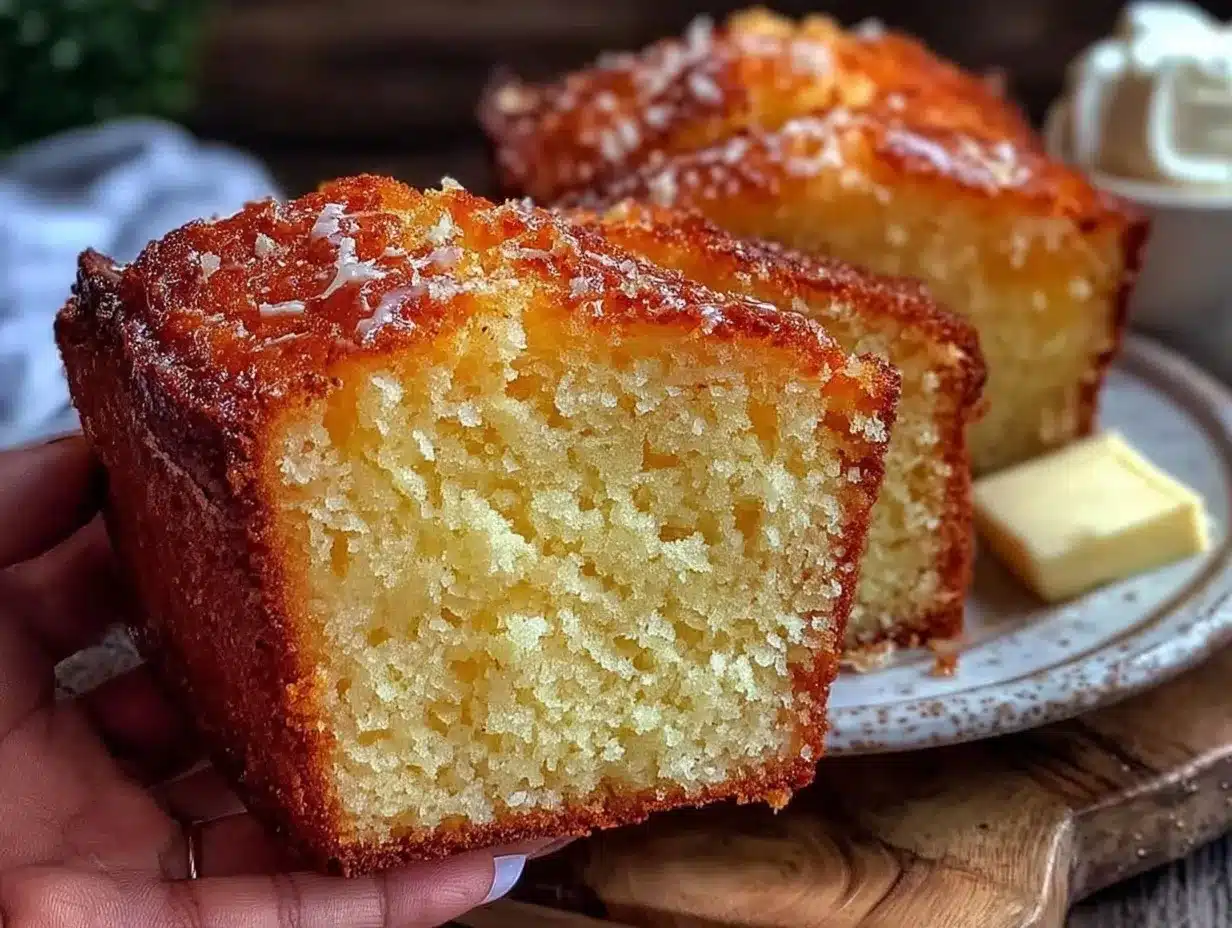
This classic homemade grandma’s pound cake is best served at room temperature, allowing the buttery flavors to shine. Try slicing it thick with a cup of black coffee or a dollop of whipped cream for a simple yet satisfying treat.
For a fancier touch, serve with fresh berries or a drizzle of homemade berry compote—something I love doing on warm spring afternoons. It pairs wonderfully with light teas and even iced lattes.
To store, wrap the cooled cake tightly in plastic wrap or place in an airtight container. It keeps well at room temperature for up to 3 days. For longer storage, freeze the wrapped cake for up to 3 months. Thaw overnight in the fridge, then bring to room temp before serving.
Reheating slices in a warm oven (about 300°F / 150°C for 5-7 minutes) restores that just-baked feeling. I find the flavors deepen slightly after a day or two, making it even better the next day, if you can wait that long!
Nutritional Information & Benefits
Per serving (based on 12 slices): approximately 320 calories, 18g fat, 35g carbohydrates, and 4g protein.
This pound cake is rich in butter, providing a good source of vitamin A and satisfying healthy fats. Using whole eggs adds protein and essential nutrients, while the milk contributes calcium. Keep in mind it’s a treat—not an everyday snack—but perfect for when you want a little indulgence with familiar ingredients.
For those watching carbs, consider serving smaller slices or pairing with fresh fruit to balance the sweetness. Gluten-free or dairy-free adaptations can accommodate dietary restrictions without losing the cake’s heartwarming essence.
Conclusion
This classic homemade grandma’s pound cake recipe is a delicious reminder that simple ingredients and a little patience can create something truly special. I love how it brings people together—whether it’s a casual coffee with friends or a quiet moment with a slice and a book. You can make it your own with easy tweaks, but honestly, the original version holds a warm spot in my heart for its buttery, moist crumb and nostalgic feel.
Give this recipe a try—maybe you’ll find yourself making it over and over like I do. Don’t forget to share your experience or any personal twists you add. I’d love to hear how this cake fits into your kitchen stories!
FAQs
- Can I use salted butter instead of unsalted? Yes, but reduce the added salt to avoid an overly salty cake.
- How do I prevent the cake from drying out? Avoid overbaking and store the cake wrapped tightly to keep moisture in.
- Can I make this pound cake ahead of time? Absolutely! It keeps well for a few days and freezes beautifully for longer storage.
- Why is my pound cake dense or heavy? Usually from overmixing the batter or using cold ingredients. Make sure to cream butter and sugar properly and use room temp eggs and milk.
- Can I use a Bundt pan instead of a loaf pan? Yes, just adjust the baking time slightly and watch for doneness with a toothpick test.
For another comforting baked good, you might enjoy my classic vanilla cupcakes recipe or the rich homemade lemon bars, both great for sharing with friends and family.
Pin This Recipe!
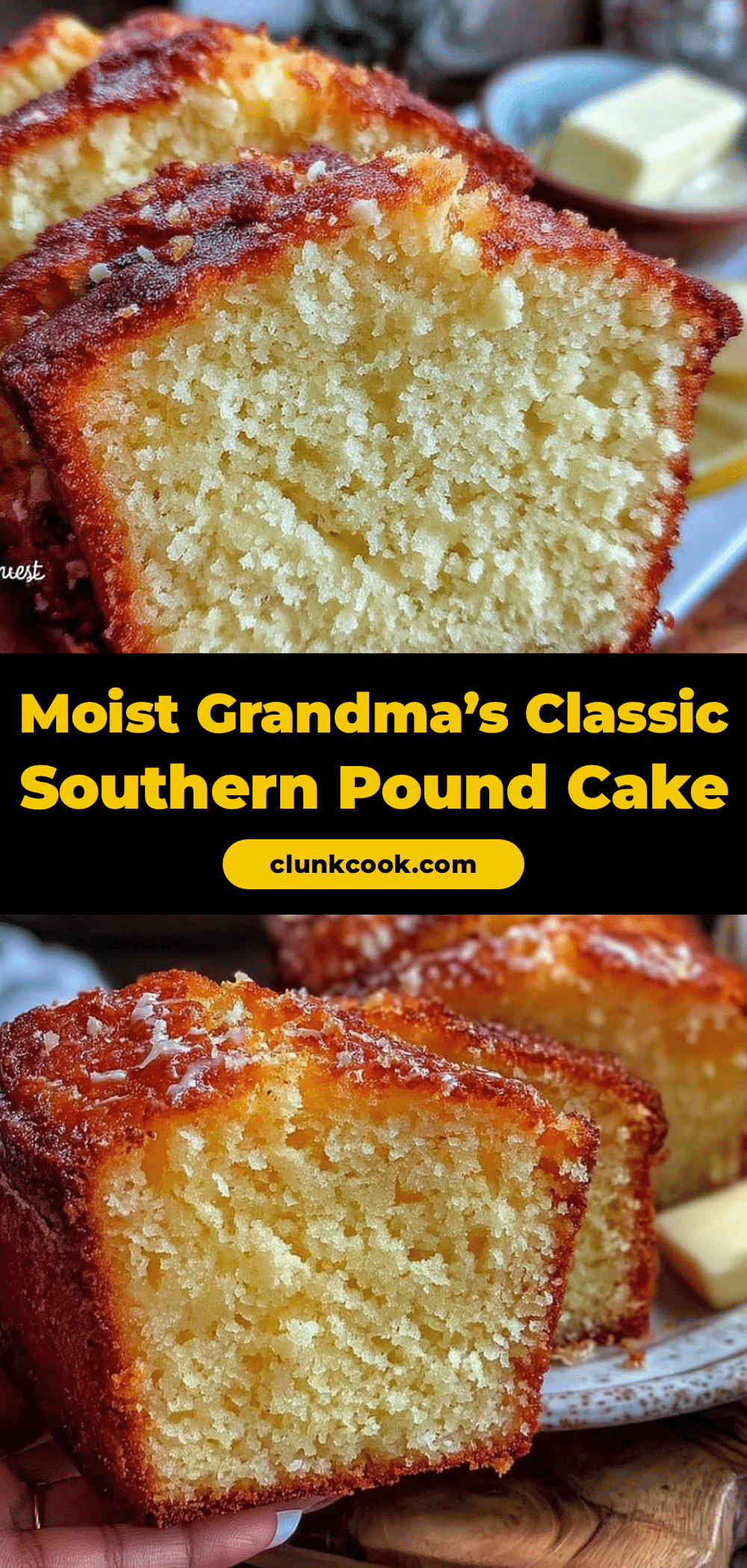
Classic Homemade Grandma’s Pound Cake Recipe with Moist Buttery Crumb
A timeless pound cake recipe featuring a moist, buttery crumb and simple pantry ingredients. Perfect for cozy gatherings and easy to make with straightforward steps.
- Prep Time: 15 minutes
- Cook Time: 60-70 minutes
- Total Time: 75-85 minutes
- Yield: 12 servings 1x
- Category: Dessert
- Cuisine: American
Ingredients
- 1 cup (226 grams) unsalted butter, softened
- 1 1/2 cups (300 grams) granulated sugar
- 4 large eggs, room temperature
- 2 cups (250 grams) all-purpose flour, sifted
- 1 1/2 teaspoons baking powder
- 1/4 teaspoon salt
- 1/2 cup (120 ml) whole milk, room temperature
- 1 teaspoon vanilla extract
Instructions
- Preheat your oven to 325°F (163°C). Grease your 9×5-inch loaf pan with butter and line it with parchment paper, letting some overhang for easy cake removal.
- In a large mixing bowl, beat the softened unsalted butter and granulated sugar using an electric mixer on medium speed for about 5 minutes until light, pale, and fluffy.
- Add eggs one at a time, beating well after each addition to ensure smooth batter.
- In a separate bowl, sift together the all-purpose flour, baking powder, and salt.
- Add the dry ingredients in three batches to the butter mixture, alternating with the whole milk and vanilla extract. Start and end with the dry ingredients. Fold gently with a rubber spatula after each addition until just combined.
- Pour the batter into the prepared loaf pan and smooth the top with a spatula.
- Bake for 60 to 70 minutes. After 50 minutes, check doneness by inserting a toothpick in the center; it should come out clean or with a few moist crumbs.
- Let the cake cool in the pan for 15 minutes, then lift it out using the parchment paper and transfer to a wire rack to cool completely.
Notes
Use room temperature ingredients for best results. Cream butter and sugar well to trap air for a fluffy rise. Avoid overmixing after adding flour to prevent toughness. Baking at 325°F ensures even cooking without drying out. Cool cake properly before slicing to maintain moist crumb. For gluten-free, substitute almond flour but expect denser texture. For dairy-free, use coconut oil and almond or oat milk.
Nutrition
- Serving Size: 1 slice (1/12th of c
- Calories: 320
- Fat: 18
- Carbohydrates: 35
- Protein: 4
Keywords: pound cake, classic pound cake, homemade cake, buttery cake, moist cake, easy dessert, grandma's recipe