Love this? Save it for later!
Share the inspiration with your friends
“I wasn’t expecting much when I moved into my tiny dorm kitchen—three pots, a hot plate, and a stubborn mini-fridge that sounded like a jet engine.” It was the first week of my freshman summer session, and honestly, I was ready to live off instant noodles or takeout. But then one afternoon, while unpacking my few groceries, I stumbled upon a crumpled recipe card tucked inside a library book I’d borrowed. It was titled “Easy Summer Dinner Recipes for Students Living Alone.”
The handwriting was a little messy, the ink smudged in places, but the simplicity of the dishes caught my eye. I figured, why not try? Fast forward a few weeks, and those quick, fuss-free meals became my go-to lifesavers. Between late-night study sessions and weekend hangouts, these recipes fit perfectly into my busy, unpredictable schedule without demanding a full kitchen or too many ingredients.
Maybe you’ve been there—wondering how to whip up something tasty without wasting time or money, especially when you’re just starting out on your own. These easy summer dinner recipes are designed exactly for that: simple, quick, budget-friendly, and with flavors that feel like a little victory after a long day. Let me tell you, the cracked measuring cup and the one time I almost burned the garlic are all part of the charm here. If you want to eat well without the stress, keep reading—these five quick meals might just become your new favorites.
Why You’ll Love This Recipe
After testing these easy summer dinner recipes over countless solo evenings, I can honestly say they tick all the boxes for any student living alone. Here’s why they stood out and kept me coming back:
- Quick & Easy: Each meal comes together in under 30 minutes, making them perfect for those busy school nights or when you just want to relax fast.
- Simple Ingredients: No need for specialty stores or exotic spices—most ingredients are pantry staples or fresh summer produce you can find anywhere.
- Perfect for Solo Dining: Recipes are portioned just right for one, so no wasted leftovers or endless containers cluttering your fridge.
- Crowd-Pleaser: Even friends who stopped by unexpectedly loved these dishes, proving that simple can be seriously satisfying.
- Unbelievably Delicious: From fresh herbs to zesty dressings, each recipe balances flavors that feel both light and comforting in the summer heat.
What makes these recipes different is the little twists I added after a few rounds in my tiny kitchen—like swapping out heavy cream for coconut milk in a pasta sauce or adding a splash of lemon to brighten a simple grain bowl. These are not just quick meals; they’re my best attempts at making solo living feel a bit cozier and a lot tastier. Honestly, after the first bite, you might close your eyes and think, “I made this all by myself!”
What Ingredients You Will Need
These easy summer dinner recipes rely on straightforward, wholesome ingredients that deliver big flavor without fuss. Most you probably already have on hand, or can find easily at your local grocery or farmer’s market.
- Fresh Vegetables: Cherry tomatoes, cucumbers, bell peppers, zucchini (great for roasting or salads)
- Proteins: Canned chickpeas or black beans (no cooking needed!), boneless chicken breasts or thighs (optional for meat eaters), eggs
- Grains & Pasta: Quick-cooking couscous, instant brown rice, or spaghetti (look for whole wheat or gluten-free options if needed)
- Dairy & Alternatives: Feta cheese (crumbled, adds a salty kick), plain Greek yogurt (great for dressings), milk or plant-based milk (almond, oat, or coconut)
- Herbs & Seasonings: Fresh basil, cilantro, garlic cloves, lemon (for zest and juice), olive oil, salt, black pepper, red pepper flakes
- Pantry Staples: Canned diced tomatoes, soy sauce, honey or maple syrup, mustard (Dijon or whole grain)
For best results, I recommend brands like Barilla for pasta—they cook evenly and don’t clump. For canned beans, go for BPA-free cans or dried beans if you want to soak ahead. And if you’re feeling adventurous, try swapping couscous with quinoa for a protein boost. Summer herbs are the real game changers here; I always pick up a fresh bunch of basil or cilantro from the farmer’s market when I can—it makes a difference you’ll notice immediately.
Equipment Needed
One of the best parts about these easy summer dinner recipes is that they don’t require a fancy kitchen setup. Here’s what you’ll need:
- A medium-sized saucepan or pot (for boiling pasta or grains)
- A non-stick skillet or frying pan (for sautéing veggies or proteins)
- A sharp chef’s knife and a small cutting board (trust me, a good knife speeds things up)
- Measuring cups and spoons (or just eyeball it if you’re feeling confident!)
- A mixing bowl (for salads or tossing ingredients)
- An oven tray or baking dish (optional, for roasting vegetables or chicken)
If you don’t have a skillet, a sturdy frying pan will do just fine—mine is a hand-me-down from college and still going strong. Also, a handheld citrus juicer can be a great little tool for squeezing lemons without the mess, but honestly, your hands work just as well. If you’re tight on space or budget, consider a multi-use pot that can handle both boiling and sautéing.
Preparation Method
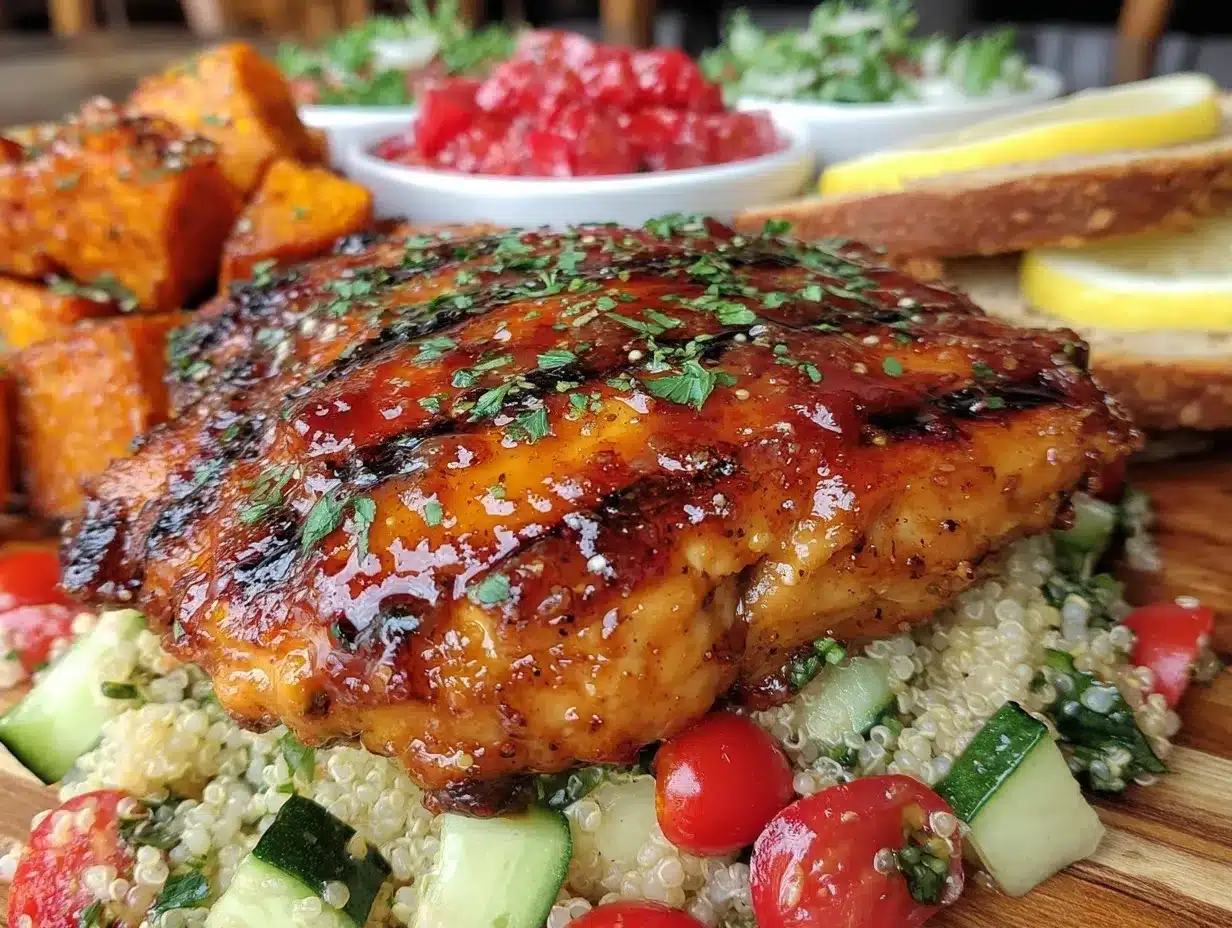
- Prep Your Veggies: Start by washing and chopping your fresh vegetables. For example, halve cherry tomatoes, dice cucumbers, and slice bell peppers into strips. This step usually takes about 10 minutes. Tip: Keeping uniform sizes helps everything cook evenly.
- Cook Your Grain or Pasta: Bring a medium pot of salted water to a boil. Add 1 cup (about 180 g) of couscous or pasta and cook according to package instructions (usually 8-12 minutes). Drain and set aside. Quick note: For couscous, you can just pour boiling water over it, cover, and let it steam for 5 minutes—super easy!
- Sauté Proteins and Aromatics: Heat 1 tablespoon of olive oil in your skillet over medium heat. Add minced garlic (1-2 cloves) and sauté until fragrant, about 30 seconds. Then add your protein choice—like drained chickpeas or cubed chicken—and cook until golden brown (about 5-7 minutes). Pro tip: Don’t overcrowd the pan to get a nice sear.
- Combine Ingredients: In a mixing bowl, toss your cooked grains, sautéed protein, and fresh veggies together. Add crumbled feta or a dollop of Greek yogurt if you like a creamy touch. This should take about 5 minutes.
- Season and Dress: Drizzle olive oil (1-2 tablespoons), squeeze fresh lemon juice (half a lemon), and sprinkle salt, black pepper, and red pepper flakes to taste. Mix well. Taste and adjust seasoning as needed. Sometimes a pinch of honey or a splash of soy sauce can add depth—don’t be shy to experiment!
- Serve: Plate your dish with a garnish of fresh herbs like basil or cilantro. Enjoy warm or chilled, depending on your mood. If you’re packing it for lunch, it holds up well in the fridge for up to two days.
Throughout this process, keep an eye on the timing so nothing overcooks. If you’re multitasking, prep veggies while your grain cooks to save time. Also, don’t worry if your first attempt is a little messy or uneven—those quirks just mean you’re learning. I once forgot to add salt until the end and honestly, it still tasted great with a little extra cheese!
Cooking Tips & Techniques
Let me share a few lessons I learned the hard way while perfecting these easy summer dinner recipes.
- Don’t Rush the Sauté: Giving garlic and onions time to soften before adding other ingredients unlocks more flavor. I used to toss everything in at once and ended up with bitter bites.
- Season in Layers: Add salt and spices gradually—once at the start and again after cooking. This prevents bland or overly salty dishes.
- Use Fresh Herbs Last: They lose their brightness if cooked too long, so sprinkle them on right before serving.
- Keep Portions in Mind: Cooking just for one can be tricky. I recommend halving recipes or saving leftovers in small containers to avoid food waste.
- Multitask Smartly: While grains cook, prep your veggies or make a quick dressing to streamline the process.
Also, don’t sweat small mistakes. Like the time I overcooked pasta and turned it into a “pasta mush” salad—by adding lemon and fresh veggies, it became a happy accident. Cooking solo means you get to experiment and find what works best for your taste buds.
Variations & Adaptations
These recipes are flexible, so feel free to tweak them based on what you have or prefer.
- Vegetarian/Vegan: Swap feta cheese for avocado or a sprinkle of nutritional yeast. Use coconut yogurt instead of Greek yogurt to keep it dairy-free.
- Seasonal Swaps: In summer, fresh tomatoes and cucumbers shine; in cooler months, roasted root vegetables or steamed greens work great instead.
- Flavor Twists: Add a dash of smoked paprika or a splash of balsamic vinegar for a smoky, tangy kick. I once added a spoonful of peanut butter to the dressing for a Thai-inspired vibe—it was surprisingly good!
- Cooking Method Adjustments: If you don’t want to sauté, try roasting your veggies and proteins in the oven at 400°F (200°C) for 20 minutes for a hands-off approach.
- Allergen-Friendly: For gluten-free options, use rice or quinoa instead of couscous or pasta. Always double-check canned ingredients for additives if you have allergies.
Serving & Storage Suggestions
These easy summer dinners are best enjoyed fresh and warm, but they’re also awesome chilled—perfect for those hot evenings when you just want something light.
Pair your meal with a crisp side salad or some crusty bread if you’re feeling fancy. A cold glass of iced tea or sparkling water with lemon complements the bright flavors nicely.
To store leftovers, transfer to an airtight container and refrigerate for up to two days. Reheat gently in a microwave or on the stovetop, stirring occasionally to keep everything evenly warm.
Funny thing is, some flavors actually deepen after a day or two, especially dishes with lemon and garlic. I often make extra so I can enjoy a second dinner that tastes just as good—if not better!
Nutritional Information & Benefits
These recipes offer a balanced mix of nutrients, making them ideal for students who need energy and focus without feeling weighed down.
- High in fiber from fresh vegetables and whole grains, supporting digestion and sustained energy.
- Good protein sources from beans, chicken, or eggs help with muscle repair and satiety.
- Healthy fats from olive oil and nuts contribute to brain health and flavor.
- Low in processed sugars, making them a wholesome alternative to quick takeout meals.
Most recipes are naturally gluten-free or can be easily modified, and they avoid heavy creams or excessive oils, keeping meals light and refreshing for summer. Personally, eating this way helped me stay energized through long study nights without that sluggish feeling afterward.
Conclusion
In the chaos of student life, especially when living alone, having a handful of easy summer dinner recipes that are quick, affordable, and tasty can feel like a small win every day. These meals helped me build confidence in the kitchen and enjoy food that felt nourishing—not just convenient.
Feel free to make these recipes your own by swapping ingredients or adding your favorite spices. I hope you find as much joy in cooking and eating them as I did, with all the imperfect moments and discoveries that come with it.
If you give these recipes a try, drop a comment and share your tweaks or stories—I love hearing how these meals fit into your life. Here’s to tasty, simple dinners that make solo living a little sweeter!
FAQs
What are some quick summer dinner ideas for students living alone?
Simple grain bowls with fresh veggies, sautéed proteins, and easy dressings; pasta with light sauces; and no-cook salads with beans and cheese are all great options that take under 30 minutes.
Can I make these recipes with limited kitchen equipment?
Absolutely! These recipes require just basic tools like a pot, skillet, and knife—great for small dorm or apartment kitchens.
How can I store leftovers safely?
Use airtight containers and refrigerate leftovers within two hours of cooking. They usually keep well for up to two days and reheat easily.
Are these recipes budget-friendly?
Yes, most ingredients are affordable pantry staples or seasonal produce, making these meals wallet-friendly for students.
Can I adapt these recipes for dietary restrictions?
Definitely! Swap grains to gluten-free options, use plant-based yogurt for dairy-free needs, and omit animal proteins for vegetarian or vegan versions.
Pin This Recipe!
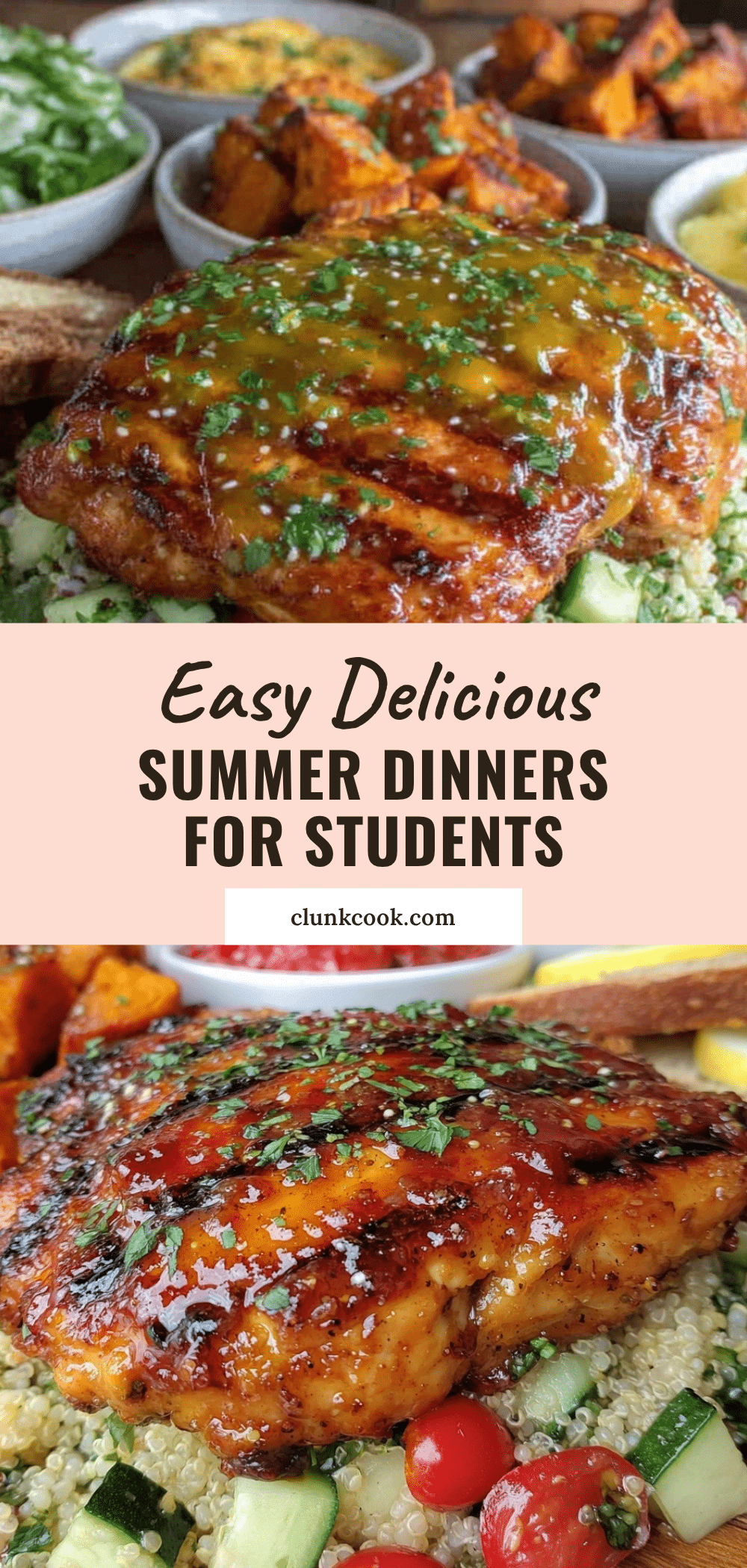
Easy Summer Dinner Recipes for Students Living Alone

Quick, simple, and budget-friendly summer dinner recipes perfect for students living alone, requiring minimal kitchen equipment and fresh, wholesome ingredients.
- Prep Time: 10 minutes
- Cook Time: 15 minutes
- Total Time: 25 minutes
- Yield: 1 serving
- Category: Main Course
- Cuisine: American
Ingredients
- Cherry tomatoes
- Cucumbers
- Bell peppers
- Zucchini
- Canned chickpeas or black beans
- Boneless chicken breasts or thighs (optional)
- Eggs
- Quick-cooking couscous
- Instant brown rice
- Spaghetti (whole wheat or gluten-free options)
- Feta cheese (crumbled)
- Plain Greek yogurt
- Milk or plant-based milk (almond, oat, or coconut)
- Fresh basil
- Cilantro
- Garlic cloves
- Lemon (zest and juice)
- Olive oil
- Salt
- Black pepper
- Red pepper flakes
- Canned diced tomatoes
- Soy sauce
- Honey or maple syrup
- Mustard (Dijon or whole grain)
Instructions
- Wash and chop fresh vegetables: halve cherry tomatoes, dice cucumbers, and slice bell peppers into strips.
- Bring a medium pot of salted water to a boil. Add 1 cup of couscous or pasta and cook according to package instructions (8-12 minutes). Drain and set aside. For couscous, pour boiling water over it, cover, and let steam for 5 minutes.
- Heat 1 tablespoon olive oil in a skillet over medium heat. Add 1-2 minced garlic cloves and sauté until fragrant, about 30 seconds. Add protein choice (drained chickpeas or cubed chicken) and cook until golden brown, about 5-7 minutes.
- In a mixing bowl, toss cooked grains, sautéed protein, and fresh veggies together. Add crumbled feta or a dollop of Greek yogurt if desired.
- Drizzle 1-2 tablespoons olive oil, squeeze juice of half a lemon, and season with salt, black pepper, and red pepper flakes to taste. Mix well. Optionally add a pinch of honey or a splash of soy sauce for extra depth.
- Plate the dish and garnish with fresh herbs like basil or cilantro. Serve warm or chilled.
Notes
Keep vegetable pieces uniform for even cooking. Season in layers to avoid blandness. Fresh herbs should be added last to preserve brightness. Recipes can be adapted for vegan or gluten-free diets by swapping ingredients. Leftovers keep well refrigerated for up to two days.
Nutrition
- Serving Size: 1 individual portion
- Calories: 450
- Sugar: 7
- Sodium: 550
- Fat: 18
- Saturated Fat: 4
- Carbohydrates: 45
- Fiber: 8
- Protein: 22
Keywords: easy summer dinner, quick meals, student recipes, solo cooking, budget-friendly, healthy summer meals, simple ingredients