Love this? Save it for later!
Share the inspiration with your friends
“You won’t believe what happened at the farmers’ market last Sunday,” I told my friend while juggling a basket full of fresh produce. I’d just stumbled upon this incredible duck breast at the vendor’s stall—thick, glossy, and begging to be cooked right away. Honestly, I wasn’t planning on duck that day. I was after the usual: tomatoes, herbs, maybe some fresh figs. But the sight of those perfectly trimmed duck breasts called my name louder than the crowd around the heirloom tomatoes.
So there I was, back home, with no real plan. I’d never made duck before, and you know that feeling when you’re staring down a fancy cut of meat and suddenly second-guess your skills? Yeah, that was me. I got distracted halfway through prepping because the phone rang—and not just once, but twice. Somehow, through the chaos, I ended up crafting what I now call my perfect seared duck breast with cherry port reduction.
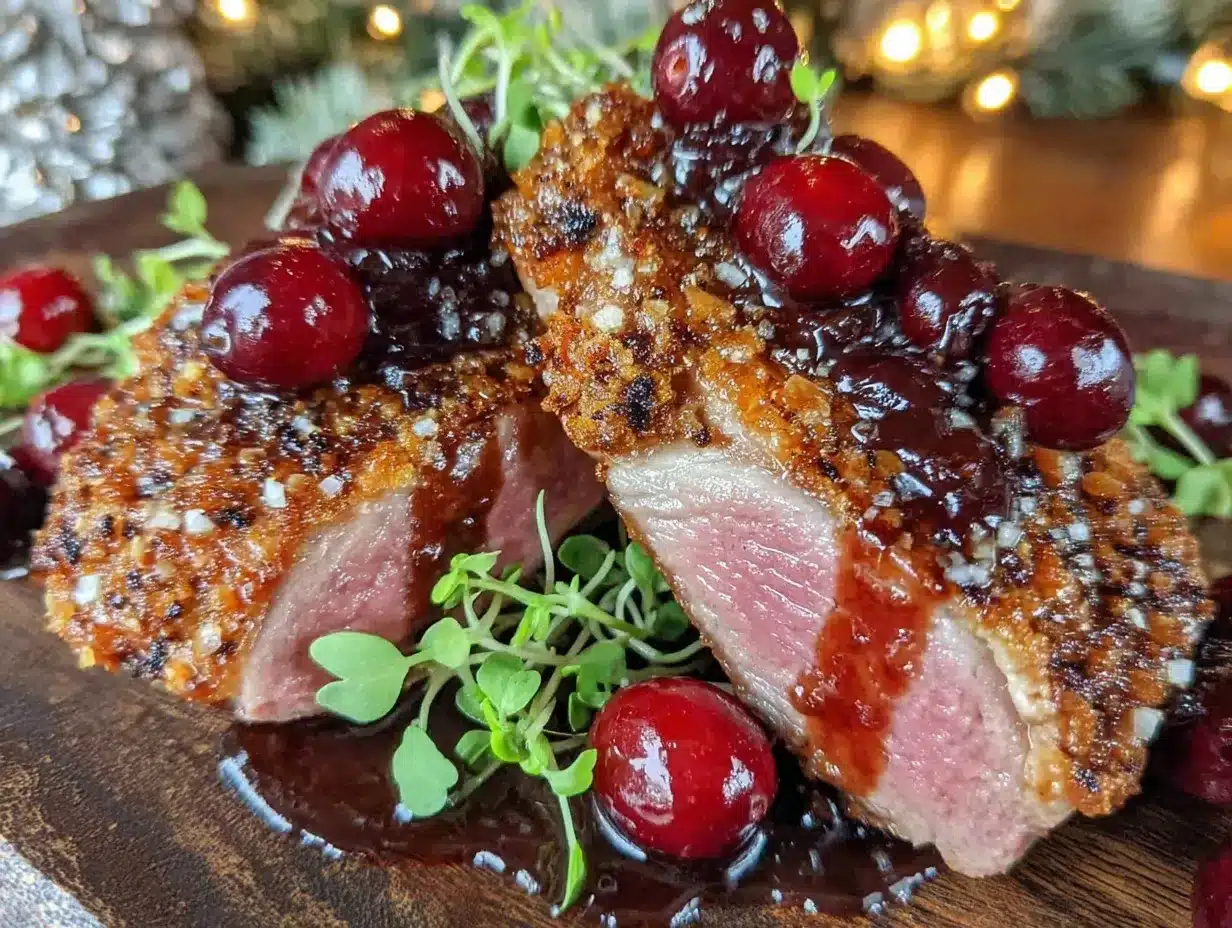
This recipe has since become my secret weapon when I want to impress but don’t want to spend hours fussing over dinner. The crispy skin, tender pink meat, and that luscious cherry port sauce—honestly, it’s like a little celebration every time. Maybe you’ve been there too, facing that fancy ingredient with a mix of excitement and hesitation. Let me tell you, if I can pull this off, so can you.
Why You’ll Love This Recipe
- Quick & Easy: Ready in about 30 minutes, making it perfect for those unexpected dinner guests or date nights at home.
- Simple Ingredients: No hard-to-find items here—just quality duck breast, fresh cherries (or frozen in a pinch), and a splash of port wine.
- Perfect for Special Occasions: Whether it’s a romantic dinner or a holiday meal, this duck breast recipe feels fancy but is stress-free.
- Crowd-Pleaser: Even duck skeptics tend to fall for the crispy skin and that sweet-tart cherry sauce.
- Unbelievably Delicious: The contrast of textures and flavors hits all the right notes—comfort food with a gourmet twist.
What sets this duck breast recipe apart is the cherry port reduction. It’s not just a sauce; it’s the perfect balance of sweetness and acidity that complements the rich, gamey flavor of the duck without overpowering it. Plus, I’ve tested this recipe multiple times, tweaking the seasoning and cooking times until the skin is irresistibly crisp and the meat stays tender and juicy. It’s the kind of dish that makes you close your eyes on the first bite and smile.
This recipe isn’t just another seared duck breast; it’s the one that keeps me coming back because it’s reliable, impressive, and honestly, a little bit addictive.
What Ingredients You Will Need
This recipe uses simple, wholesome ingredients to deliver bold flavor and satisfying texture without the fuss. Most are pantry staples or easy to find at your local market, and substitutions are straightforward if you’re in a pinch.
- Duck Breasts – 2 skin-on duck breasts (about 6–8 oz / 170–225 g each), trimmed and scored for crispiness
- Salt & Pepper – to season the duck generously
- Fresh Cherries – 1 cup pitted (fresh in season or frozen work great; frozen need to be thawed)
- Port Wine – ½ cup (120 ml) – I recommend a ruby port for its rich sweetness
- Shallot – 1 small, finely minced (adds delicate depth)
- Garlic – 1 clove, minced
- Butter – 2 tablespoons (unsalted, softened for sauce finishing)
- Fresh Thyme – 2 sprigs (optional, but adds a lovely herbal note)
- Olive Oil – 1 tablespoon (for searing)
If you can’t find port, a dry red wine or even balsamic vinegar can work as a substitute, though the flavor profile will shift a bit. For a dairy-free version, swap butter with coconut oil or a vegan butter alternative. When selecting duck breasts, I prefer ones from local farms or trusted brands like Foster Farms for consistent quality and flavor.
Equipment Needed
- Heavy Skillet or Cast Iron Pan: A sturdy pan retains heat well and helps achieve that coveted crispy skin without burning.
- Tongs: Essential for flipping the duck breasts gently without puncturing the skin.
- Sharp Knife: For scoring the skin and trimming any excess fat.
- Saucepan: Small or medium size for the cherry port reduction sauce.
- Wooden Spoon or Silicone Spatula: To stir the sauce without scratching your pan.
- Meat Thermometer (Optional): Helpful to ensure perfect doneness if you’re not confident eyeballing the pink center.
If you don’t have cast iron, a heavy stainless steel pan will work fine. Just avoid nonstick for searing because it can’t handle the high heat as well. Also, I like to keep my knives sharp—it makes scoring the duck skin so much easier and safer. If you’re on a budget, many kitchen stores offer affordable quality pans that get the job done without breaking the bank.
Preparation Method
- Score the Duck Skin: With a sharp knife, gently score the skin in a crisscross pattern without cutting into the meat (about ¼ inch deep). This helps release fat and crisp the skin. Season both sides generously with salt and pepper. (Prep time: 5 minutes)
- Heat the Pan: Place your skillet over medium heat and add the olive oil. Let it heat until shimmering but not smoking. (Preheat time: 3 minutes)
- Sear the Duck Breast: Place the duck breasts skin side down in the pan. You should hear a steady sizzle. Cook for about 6–7 minutes, adjusting heat if the skin browns too fast. The goal is golden and crispy skin with rendered fat. Flip and sear the meat side for 3–4 minutes. (Cooking time: 10–12 minutes)
- Check Doneness: For medium-rare, aim for an internal temperature of 135°F (57°C). Rest the duck on a plate, loosely tented with foil, for 5–7 minutes to let juices redistribute.
- Make the Cherry Port Reduction: While the duck rests, add minced shallot and garlic to a saucepan over medium heat. Sauté for 1–2 minutes until fragrant. Add cherries and port wine, simmer for 8–10 minutes until sauce thickens slightly.
- Finish the Sauce: Remove from heat and whisk in butter and fresh thyme leaves. Taste and adjust seasoning with salt and pepper.
- Plate and Serve: Slice the duck breasts thinly against the grain. Drizzle the cherry port reduction over the top and garnish with extra thyme if desired.
When searing, resist the urge to move the duck around too much—it likes to sit still and crisp. Also, don’t forget to save the rendered duck fat for roasting potatoes or veggies later; it’s liquid gold. If your sauce is too tart, a teaspoon of honey can smooth it out, but usually, the cherries balance it nicely.
Cooking Tips & Techniques
Getting perfect seared duck breast is all about patience and temperature control. Start with room temperature duck—it cooks more evenly and won’t seize up in the pan. Scoring the skin is key to rendering the fat and getting that satisfying crunch. You might want to press gently with a spatula during the first few minutes to keep the skin flat against the pan.
Common mistake: flipping too early. Let the skin develop that golden crust before you flip, or you’ll miss out on texture. On the flip side, don’t overcook the meat; duck breast is best pink inside, juicy but not bloody.
While making the cherry port reduction, keep an eye on the simmer to avoid burning the sugar in the port. Stir occasionally but don’t rush the thickening process. If the sauce seems too thin, let it reduce a bit longer off heat; it thickens as it cools.
When multitasking, start the sauce as the duck rests—this trick saves time and keeps everything hot and fresh. And trust me, having a meat thermometer can calm nerves, but once you get a feel for searing times, you’ll rely on sight and touch more.
Variations & Adaptations
- Dietary Variation: For a low-carb version, skip any sugar additions in the sauce and use fresh cherries only. The natural sweetness is enough.
- Seasonal Twist: Swap cherries for blackberries or blueberries when cherries are out of season. The port reduction works beautifully with various berries.
- Flavor Adaptation: Add a splash of balsamic vinegar to the sauce for a deeper, tangier profile.
- Cooking Method: Try finishing the duck breast in a 400°F (200°C) oven for 5 minutes after searing to ease up on stovetop attention.
- Allergen Swap: Use vegan butter and a non-alcoholic grape juice reduction instead of port for a dairy-free, alcohol-free option.
One variation I love is adding a pinch of cinnamon and star anise to the sauce—it brings a warm, cozy aroma that’s perfect for fall dinners. Just a little goes a long way!
Serving & Storage Suggestions
Serve the sliced duck breast warm, spooning the cherry port reduction over the top for that gorgeous glossy finish. It pairs wonderfully with creamy mashed potatoes, roasted root vegetables, or even a simple arugula salad with toasted walnuts for a peppery crunch.
Store any leftovers in an airtight container in the fridge for up to 2 days. The meat is best gently reheated in a warm pan to avoid drying out, and the sauce can be warmed separately on low heat. Duck leftovers also make excellent sandwiches or salads the next day.
Flavors tend to deepen after a day, so if you’re not serving immediately, letting the sauce sit overnight in the fridge can boost the cherry port’s richness.
Nutritional Information & Benefits
Each serving of this perfect seared duck breast recipe provides approximately 350 calories, 28 grams of protein, and 22 grams of fat, mainly from healthy monounsaturated fats in duck skin. The cherries add antioxidants and a touch of natural sweetness without excess sugar.
Duck is a rich source of iron and zinc, supporting energy metabolism and immune function. The port reduction, while adding flavor, contains alcohol that mostly cooks off during simmering, keeping it light.
This recipe fits well into low-carb and gluten-free diets. Just be mindful of the port if you avoid alcohol, and the substitution options make it flexible for different dietary needs.
Conclusion
This perfect seared duck breast with cherry port reduction is one of those recipes that makes you look like a pro without hours in the kitchen. It’s got the wow factor—the crispy skin, the tender meat, and that silky, tangy sauce—that keeps guests asking for seconds.
Feel free to tweak the sauce or seasoning to your taste—cooking is personal, after all. I love making this when I want a bit of fancy without fuss, and honestly, it’s become my go-to when I need a quick but impressive meal.
If you try this recipe, I’d love to hear how it turns out or what variations you made. Drop a comment below and share your experience—and hey, maybe it’ll become a favorite for you too!
FAQs about Perfect Seared Duck Breast with Cherry Port Reduction
How do I know when the duck breast is cooked perfectly?
Use a meat thermometer aiming for 135°F (57°C) for medium-rare. The skin should be crispy, and the meat slightly pink inside.
Can I use frozen duck breasts?
Yes, but thaw them completely and pat dry before cooking to ensure crisp skin and even cooking.
What if I can’t find fresh cherries?
Frozen pitted cherries work great. Just thaw them before making the sauce.
Is it necessary to score the duck skin?
Scoring helps fat render out and makes the skin crispy. It’s highly recommended but be careful not to cut into the meat.
Can I make the cherry port reduction ahead of time?
Absolutely! It can be prepared a day in advance and gently reheated before serving.
Pin This Recipe!

Perfect Seared Duck Breast Recipe with Easy Cherry Port Reduction

A quick and easy recipe featuring crispy seared duck breast paired with a luscious cherry port reduction sauce, perfect for special occasions or impressing guests.
- Prep Time: 8 minutes
- Cook Time: 20 minutes
- Total Time: 28 minutes
- Yield: 2 servings 1x
- Category: Main Course
- Cuisine: French
Ingredients
- 2 skin-on duck breasts (about 6–8 oz / 170–225 g each), trimmed and scored
- Salt and pepper, to season
- 1 cup pitted fresh cherries (fresh or thawed frozen)
- ½ cup (120 ml) port wine (ruby port recommended)
- 1 small shallot, finely minced
- 1 clove garlic, minced
- 2 tablespoons unsalted butter, softened
- 2 sprigs fresh thyme (optional)
- 1 tablespoon olive oil
Instructions
- Score the duck skin in a crisscross pattern about ¼ inch deep without cutting into the meat. Season both sides generously with salt and pepper.
- Heat a heavy skillet over medium heat and add olive oil. Heat until shimmering but not smoking.
- Place duck breasts skin side down in the pan. Cook for 6–7 minutes until skin is golden and crispy, adjusting heat as needed. Flip and sear the meat side for 3–4 minutes.
- Check doneness aiming for an internal temperature of 135°F (57°C) for medium-rare. Rest the duck loosely tented with foil for 5–7 minutes.
- While the duck rests, sauté minced shallot and garlic in a saucepan over medium heat for 1–2 minutes until fragrant.
- Add cherries and port wine to the saucepan. Simmer for 8–10 minutes until the sauce thickens slightly.
- Remove from heat and whisk in butter and fresh thyme leaves. Adjust seasoning with salt and pepper to taste.
- Slice the duck breasts thinly against the grain. Drizzle the cherry port reduction over the top and garnish with extra thyme if desired.
Notes
Start with room temperature duck for even cooking. Score the skin to render fat and achieve crispiness. Resist moving the duck too much while searing. Save rendered duck fat for roasting vegetables. If sauce is too tart, add a teaspoon of honey. Sauce can be made ahead and reheated gently.
Nutrition
- Serving Size: 1 duck breast with s
- Calories: 350
- Sugar: 6
- Sodium: 350
- Fat: 22
- Saturated Fat: 7
- Carbohydrates: 8
- Fiber: 1
- Protein: 28
Keywords: duck breast, seared duck, cherry port reduction, easy duck recipe, quick gourmet meal, special occasion recipe